
Movement and Meaning in Design
Continued from Ryan Art & Design Instagram of the same title
Images courtesy of Edith Davidson. Marché Biron. 136-137 allée 2. 85 rue des Rosiers. 93400 Saint Ouen. France. https://www.marchebiron.com/en/store/edith-davidson/
Eighteenth-century Louis XV console table. Carved and gilded wood.
The article begins below the images
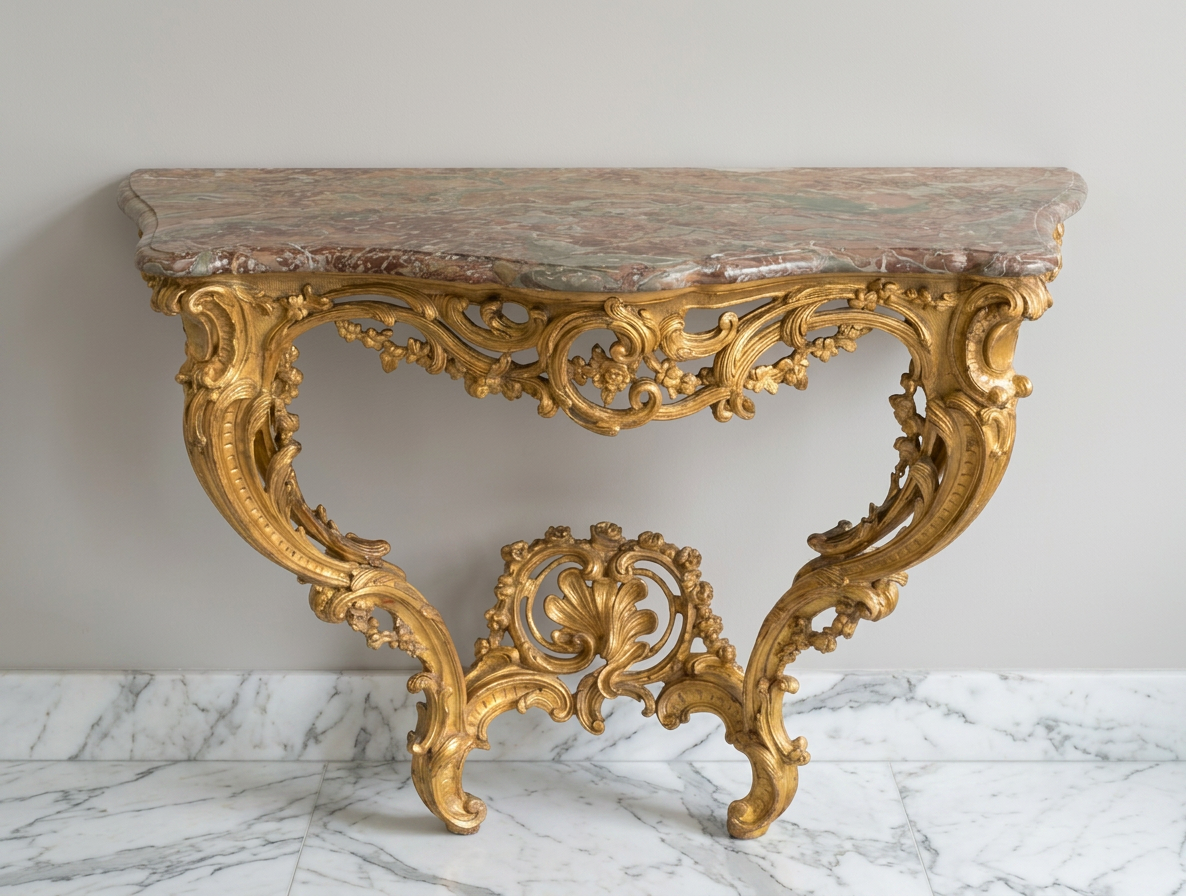
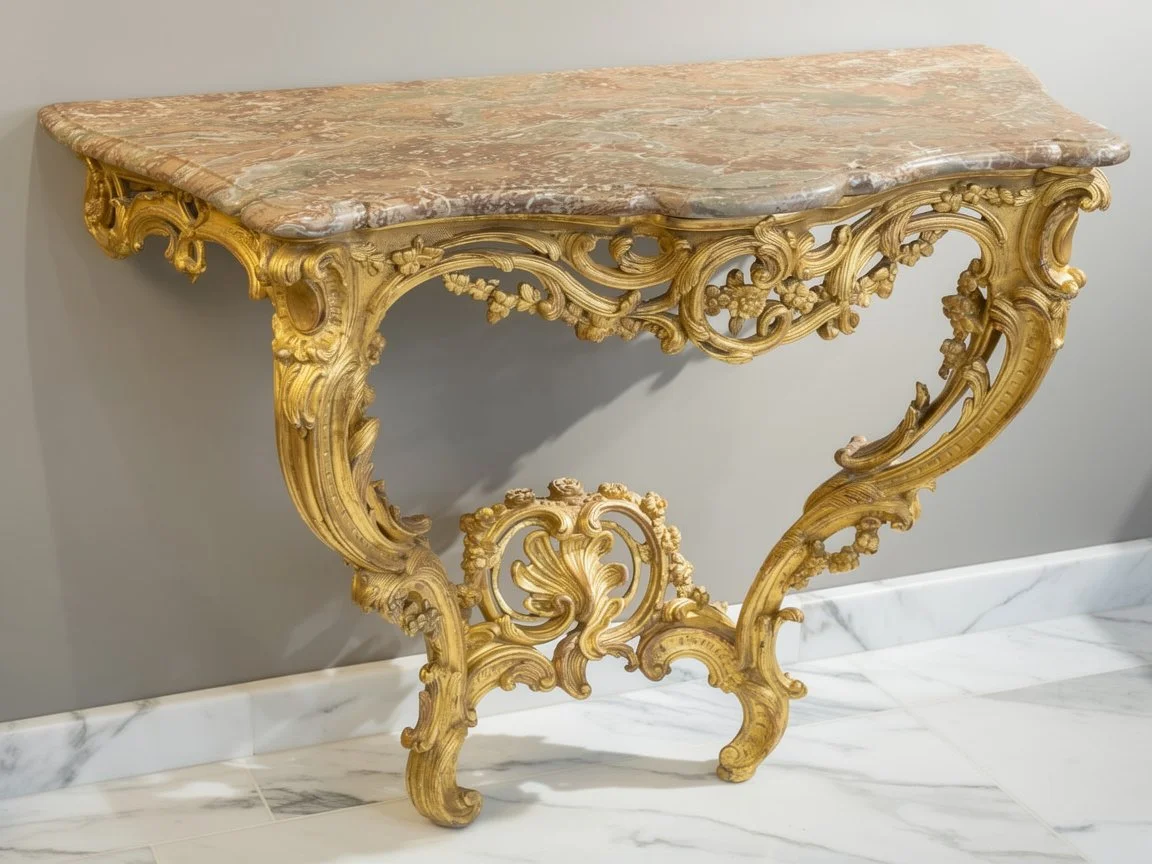
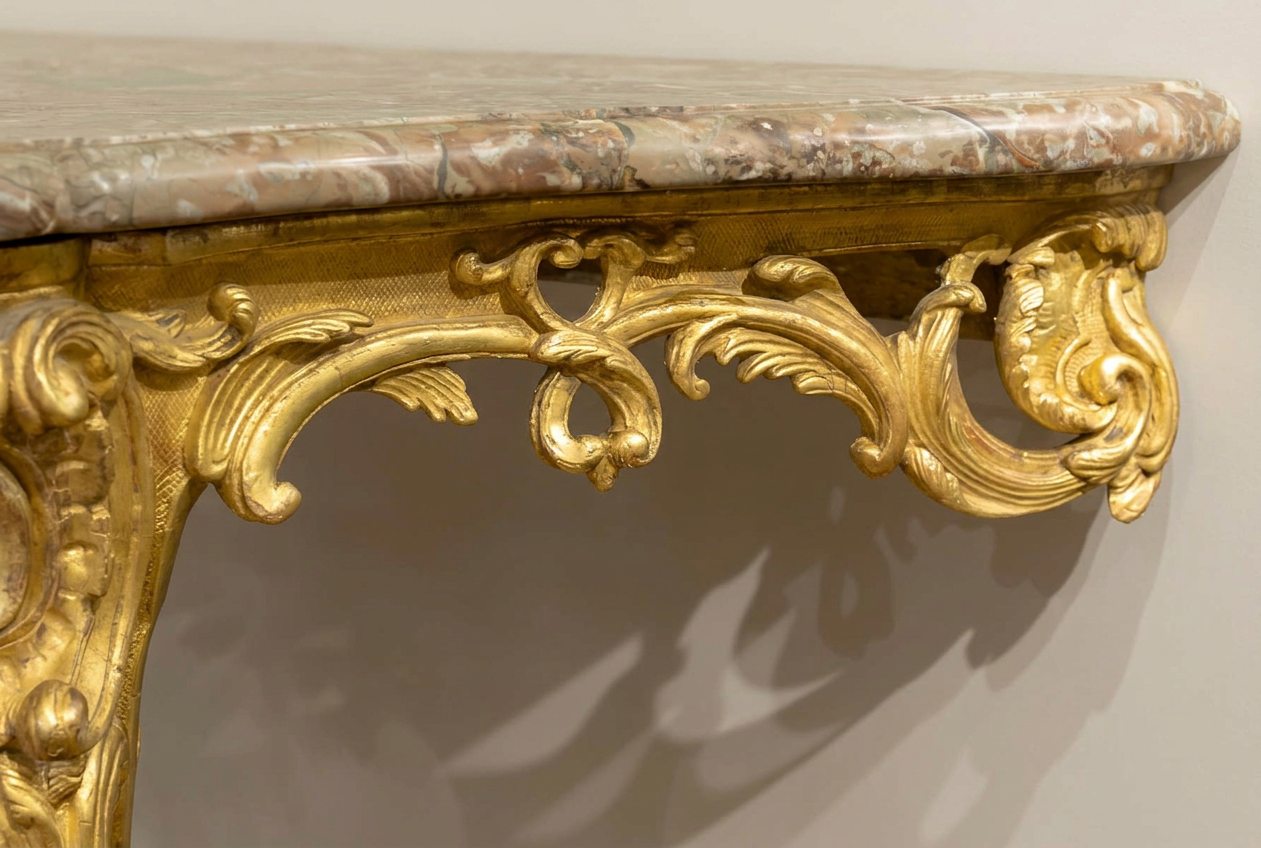
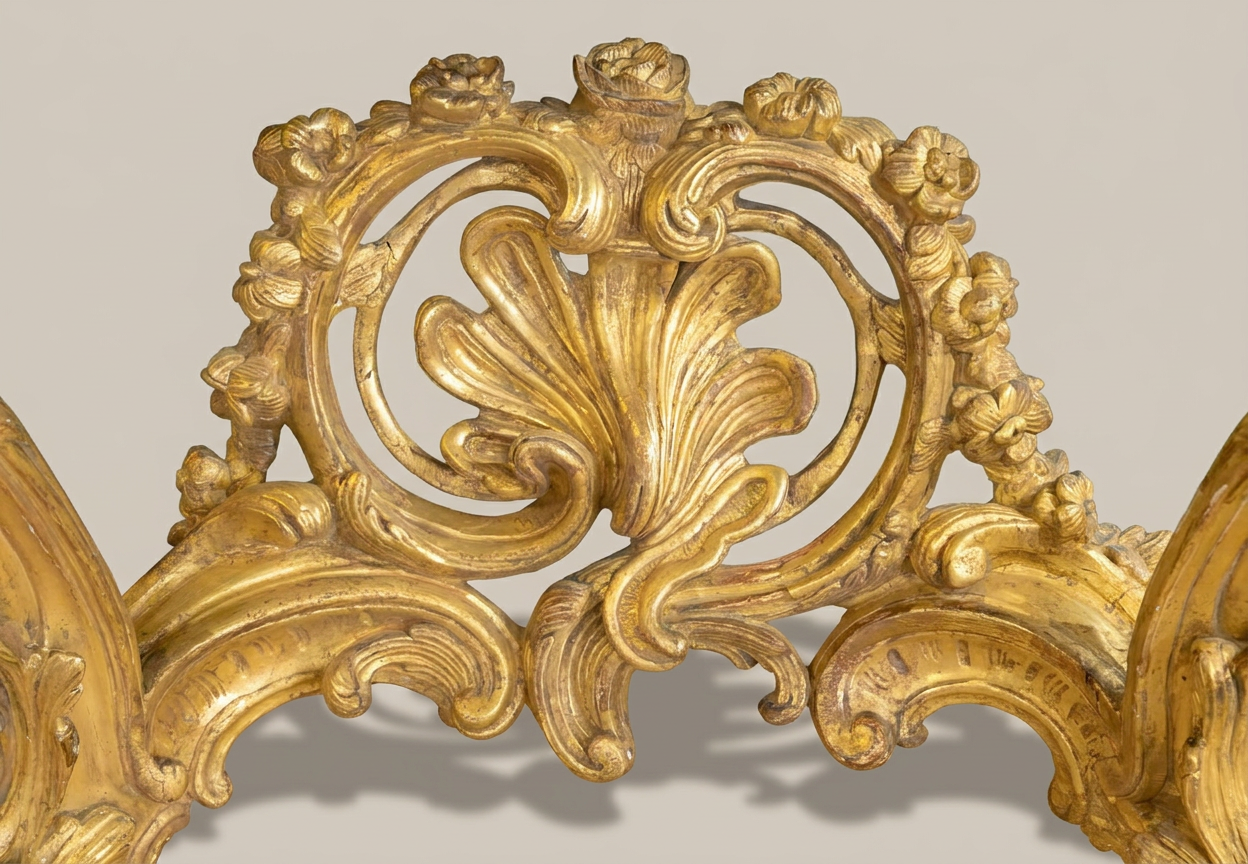
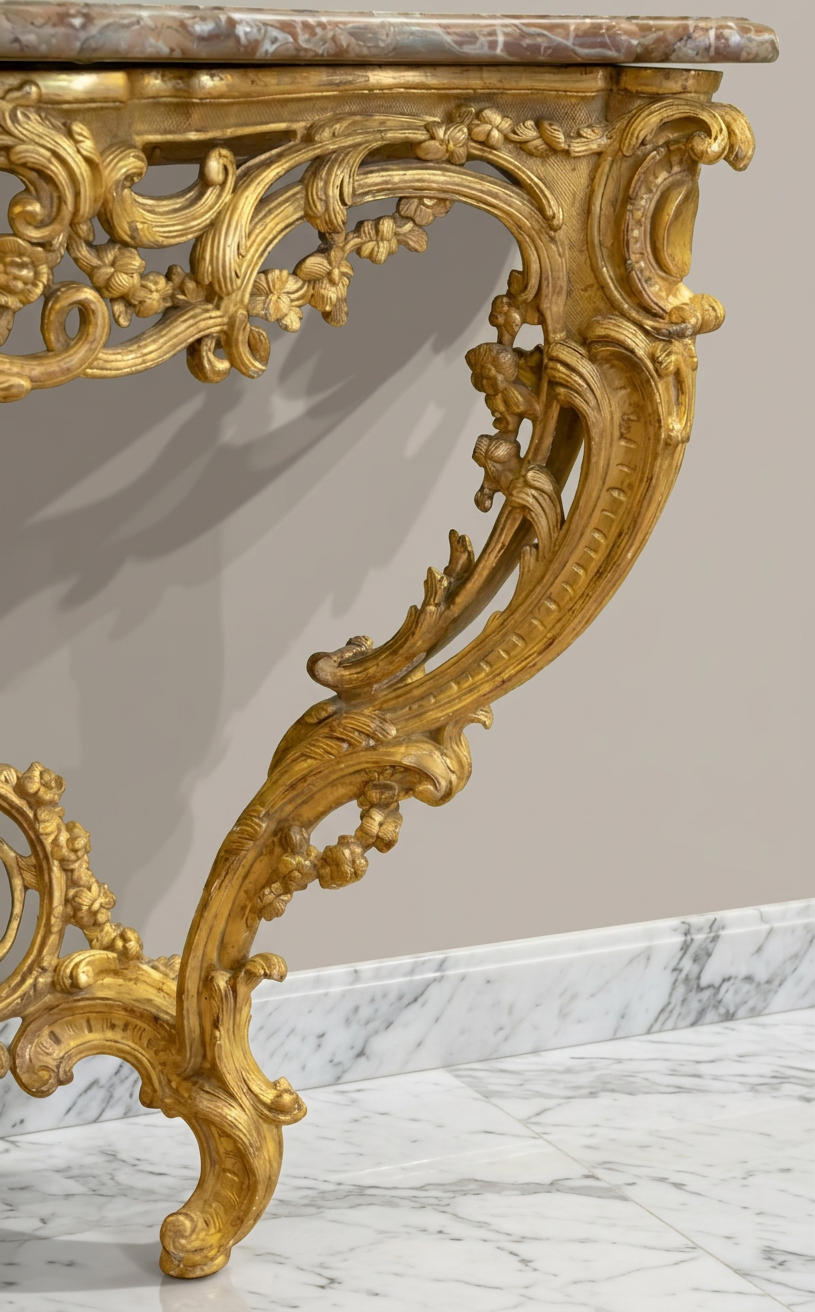
There can be no true discussion of movement in interior design without acknowledging the Louis XV style – which is the official term for the style of the period c.1730 – 60 in France. At the time, it was often referred to as le style moderne — the modern style -- and for good reason. There had been nothing like it in anyone’s living memory. What made it so revolutionary was that it was the first major Western style in roughly five centuries — since the Gothic — that was not based on Classicism.
The Baroque style that preceded it had been the signature expression of the Age of Absolutism — the absolute power of monarchs and the Church. It began in Rome and reached an apotheosis of sorts at the court of Louis XIV. Since the Louis XV style also emerged in France, I’ll confine the comparison here to the French Baroque.
Generally, Classicism is ordered, symmetrical, architectural, and governed by geometry. Its decorative motifs — acanthus leaves, laurel branches, masks and swags, along with architectural elements such as dentil molding and volutes — all belonged to that established vocabulary. Baroque Classicism differed from the Renaissance not because it abandoned those forms, but because ofhow it treated them: with greater drama, movement, scale, and exaggeration.
The Baroque was especially exuberant in Italy, where it began. But in France, where the style became a reflection of the character of Louis XIV himself, the key word was control. The free-flowing dynamism of the Italian Baroque was subjected to the same powerful authority Louis XIV exerted over virtually every aspect of court life.
For more than fifty years, France had been subject to the will and power of this tremendous personality. When Louis XIV died in 1715, an audible sigh of relief rose from the land (well, from the court, that is). A new lightness prevailed, accompanied by a rejection of the symbolism of the previous age. Classicism began to fall from favor, and a new style — expressive of new values and a new reign — began to emerge.
Under Louis XV, designers turned purposefully to the irregular, asymmetrical movement and forms of nature itself. In deliberate contrast to Classical geometry, forms began to curl, swirl, and unfurl in continuous curves, ornamented with flowers, foliage, tendrils, shells, rocks, and branches. And yet these pieces are not chaotic.
In my opinion, this is one of the most remarkable achievements of French design. The forms appear spontaneous and asymmetrical, but they are never without order. Curves answer other curves. Ornament grows from structural points. Visual weight is carefully controlled. A framework of symmetry can usually be found underlying the surface appearance of asymmetry. The result is a reconciliation of opposites:
organic and ordered, asymmetrical and balanced, free and controlled, movement and stability
(For more on the reconciliation of opposites, see The Union of Opposites: Why It Creates Compelling Design).
The style of this table is often calledRococo, although that term came later and was originally dismissive. It was derived, in part, from the French word rocaille, which refers to ornament of rocks and shells. As such, it points directly to the natural sources of the style.
And this table is completely organic in its vocabulary. Look as hard as you like: the Classical references have disappeared. (Note: There are those who say that this style is a later form of the Baroque. I don’t agree). Even its attachment to the wall reinforces the sense that the object belongs to the unity of nature, while its restless curves embody the buoyancy and freedom of the age.
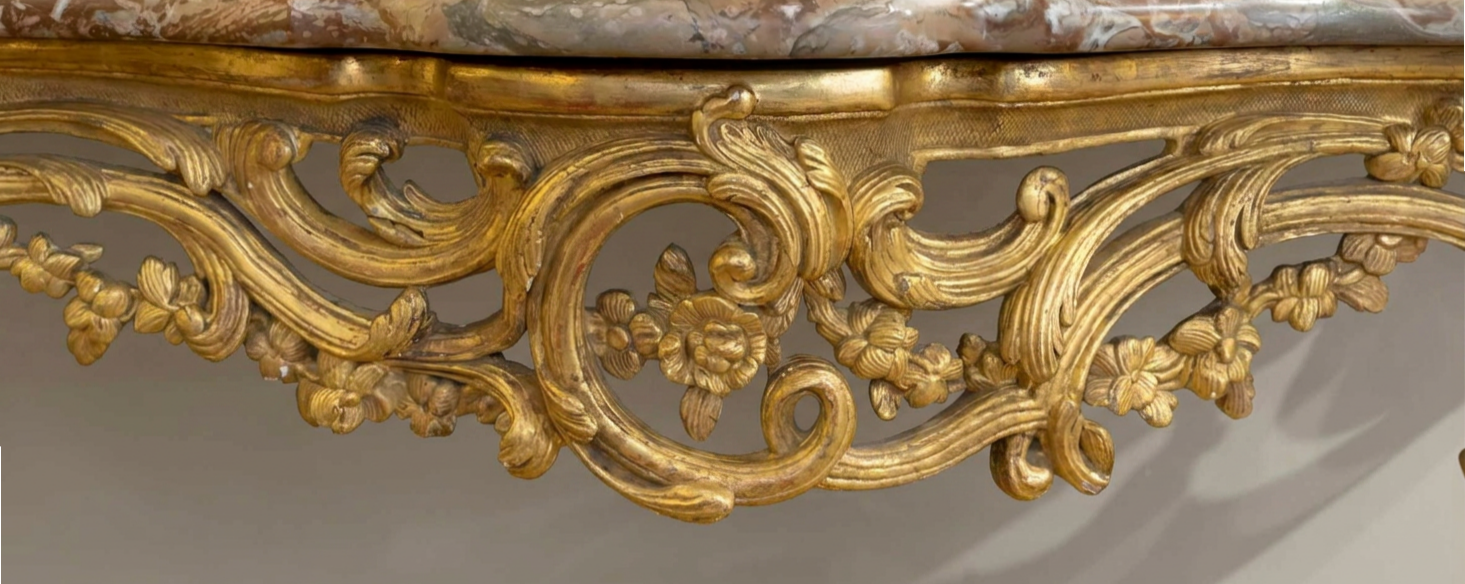
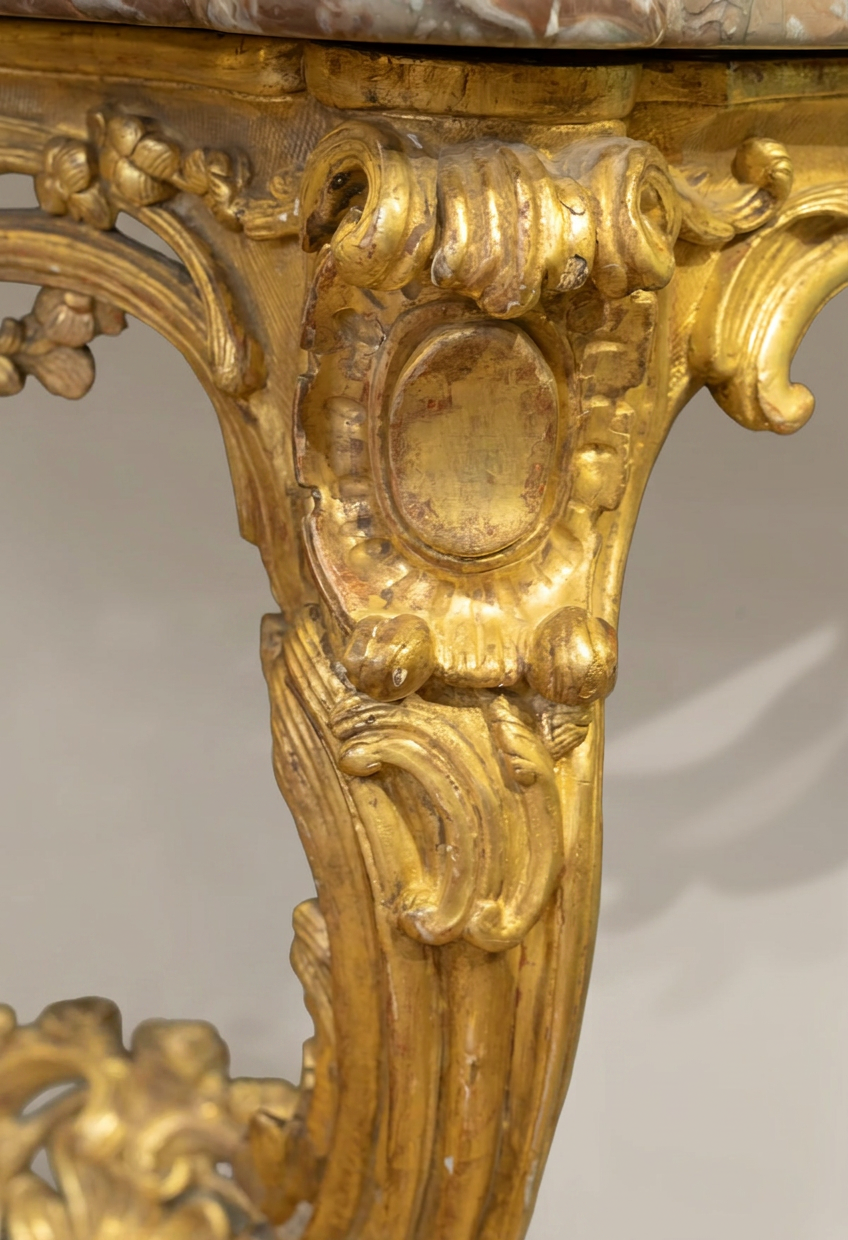
The designers might — and did — imagine fantastic, intricate, organic forms on paper, but nothing about the finished piece was accidental. Look closely, and you begin to see how thoughtfully every leaf, flower, C-curve, and change of direction was placed. The continuous curving lines of the form and the secondary elements within it sustain the movement, while the repetition of carefully placed decorative motifs creates rhythm, keeps the eye moving, and helps unite the composition.
This is the essence of hierarchy: the design works in three layers, from the large to the small. First the overall shape of the structure, the framing elements; then the secondary forms, the focal points of the piece – the central cartouche at the base, the C-curve above it, and the rocaille cartouches at the corners; and finally the details – the leaves, flowers, and play of small curves that bring it to life but never compete with the whole.
Countless small design decisions contribute to the balance of the whole — creating a sense of harmony and unity within asymmetry and what at first appears to be untethered movement.
And this is something else I tell my students often: the more closely you look at exceptional design and workmanship, the more it becomes a part of you.You begin to absorb the decisions, the standards, the possibilities. Over time, that way of seeing becomes part of your own visual vocabulary.
So the next time you’re in a museum, perhaps you’ll pause at a piece everyone is ignoring — and spend a little time with it.