

Why Creativity Is So Hard to Define
Creativity is one of the most frequently used and least clearly defined words in design. It is praised, encouraged, demanded, and evaluated, yet often left unexplained. Students are told to “be more creative;” professionals are urged to “push the envelope;” and still what creativity actually is remains frustratingly vague.
This ambiguity is not accidental. Scholars across psychology, education, and design theory have long noted that creativity resists a single, tidy definition. Some emphasize originality, others usefulness; some focus on individual insight, others on cultural context or social validation. Creativity researcher, Mark Runco, for example, has argued that originality alone is not enough; that for an idea to be considered creative, it must also be appropriate to its purpose or situation.
Educational theorist, Sir Ken Robinson, observed that creativity is often treated as a rare or mysterious talent -- something you either possess or don’t -- rather than as a capacity that can be developed. In educational settings, this belief has contributed to the idea that creativity is largely intuitive, personal, or expressive, rather than something that can be understood, practiced, and refined.
Psychologist Mihaly Csikszentmihalyi approached creativity from yet another angle. His influential work describes creativity as a systemic process, emerging through the interaction of individuals, cultural domains, and the fields that recognize and evaluate new ideas. This perspective helps explain how creative work is shaped, tested, and validated within a shared context and why ideas only become creative, in a broader sense, once they enter the world and are taken up by others.
These different perspectives reveal why creativity can feel so elusive. It is discussed as talent, as expression, as process, and as cultural phenomenon often all at once. Distinguishing between these dimensions and acknowledging that creativity begins in a simpler, more immediate way can clarify what is otherwise discussed as a single, elusive phenomenon.

Creativity often begins with an intuitive spark -- an image, a feeling, or a sudden sense of connection. These moments matter. They are the origin of creative work, and without them, the process becomes mechanical. But the spark is only the beginning. For an idea to become meaningful in a shared, functional world, it must be shaped: tested against purpose, refined through constraint, and translated into form. Discipline in this sense does not suppress creativity; it allows it to take shape, move forward, and find meaning in the world.
At the earliest stage, this spark is often experienced not as a fully formed idea, but as a feeling, a subtle excitement, a quiet sense that a fleeting thought could become something special if given attention. Because this feeling arrives softly, before there are words or images to fix it in place, it is easy to overlook or move past.
When creative thinking moves forward successfully, this initial feeling should deepen rather than fade. And as ideas are tested, clarified, shaped, and reinforced by the growing alignment between idea and intention, the early sense of promise becomes more grounded, coherent, and intentional. If that feeling begins to collapse, it may be a signal that the idea has been forced rather than developed.
Recognizing this early moment -- and understanding how it evolves -- makes creativity feel less mysterious and more accessible. It reveals creativity not as a single act or trait, but as a process that moves from inspiration toward intention, from feeling toward form.
Creativity and Self-Expression
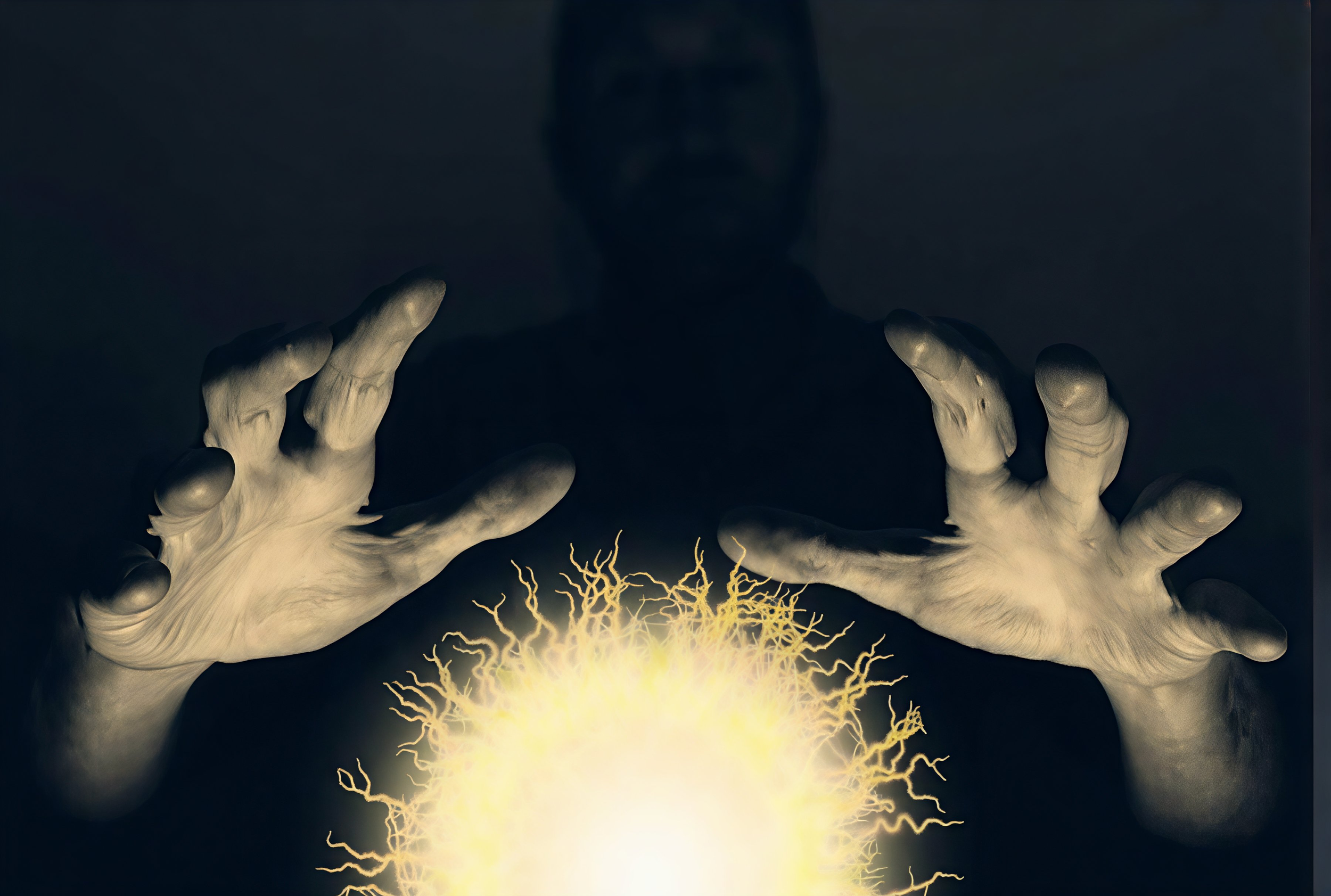
Personal expression is never absent from design. Something of the designer -- their values, sensibilities, ways of seeing -- will always come through in the work. Even the most restrained and functional design carries traces of the person who made it. Design is not neutral, and it does not require the designer to disappear.
The distinction, then, is not whether expression exists, but how it operates. In purely expressive work, personal feeling or perspective may be the primary driver. It can remain open-ended, exploratory, or private. Design, by contrast, asks that creative thinking be directed toward a purpose, a context, an audience. Expression is not disavowed in this process; it is molded by intention rather than standing alone.
This act of shaping and directing ideas demands more creativity of the designer, not less.
This is where confusion often arises. When self-expression is treated as the goal of design, creative work can become self-referential, arbitrary, untethered from purpose or use. But if denied altogether, the work risks becoming lifeless. Design requires a balance: personal sensibility is present, but it is guided and focused rather than unchecked.
In this way, self-expression in design is not eliminated, but channeled. It contributes to the character and depth of a project while remaining in service of something larger than the designer alone. Expression becomes meaningful not because it is personal, but because it is intentional.
Once self-expression is understood as inevitable rather than oppositional, the role of creativity in design becomes clearer. Creativity is no longer defined by self-expression alone, but by the ability to shape ideas so they can be understood, experienced, and shared. It is this shift -- from self-expression toward intention -- that allows creativity to expand in a purposeful way.
Creativity in Design Is Purposeful, Intentional, and Relational
Creativity in design is not free-floating or purely self-directed; it is purposeful, intentional, and relational. It responds to a set of conditions that shape both the questions being asked and the possibilities that emerge in response. These conditions may take many forms: a brief, a program, a client, a user, a site, a historical reference, or a cultural moment. Far from limiting creativity, these conditions provide its point of engagement. They give creative thinking something to work against and toward at the same time.
Because design is relational, creative decisions must be legible to others. An idea that feels compelling to the designer but cannot be successfully translated into a form that can be understood and experienced by others has not yet fully entered the realm of design.
This act of translation is, itself, a creative process. It requires the designer to move an idea from internal recognition to the external, physical world of function and meaning.

Creativity moves forward not by resisting structure, but by working within a network of relationships that give ideas meaning and direction. Creative thinking becomes effective when ideas, choices, and forms align around a guiding purpose and when that alignment can be sustained across many decisions. In this context, creativity is not measured by novelty alone, but by coherence.
Creativity, Coherence, and the Role of Concept
As creative thinking in design moves from intention into practice, it encounters a new demand: coherence. Ideas must not only be compelling in isolation; they must hold together across time, scale, and decision-making. This is where creativity is tested—not diminished.
Design unfolds through many interconnected choices. As ideas are developed, translated into form, and adjusted in response to real conditions, early insights can easily fragment or lose clarity. Creativity in design must be sustained, evaluated, and refined so that intention remains legible throughout a project.
This need for coherence requires more than intuition alone. It calls for a framework that allows creative thinking to be assessed, aligned, and carried forward. Without such a framework, even strong ideas risk becoming inconsistent or arbitrary as complexity increases. The project concept is what provides that framework.
A concept is not a decorative theme or a slogan applied after the fact. It is an organizing idea; an underlying logic that connects intention to execution and allows creativity to operate consistently across many decisions. The concept holds the original spark in place while giving it direction, helping designers assess choices, maintain focus, and preserve alignment as a project develops.

Coherence emerges from apparent complexity when elements are organized by an underlying structure.
In design, that structure is provided by the concept.
Again, this kind of structure does not reduce creativity; it demands more of it. Unbridled self-expression—doing whatever one feels like doing—is relatively easy; but having to generate inspired solutions within the constraint of a concept requiresa higher level of creative thinking. It also requires ongoing creative judgment—testing relationships, refining ideas, and responding thoughtfully as conditions evolve. Discipline, in this sense, is not the opposite of creativity but one of its essential supports. It enables creative thinking to deepen rather than dissipate.
Seen this way, creativity in design is neither spontaneous expression nor rigid problem-solving. It is a disciplined, responsive mode of thinking—one that transforms inspiration into intention, and intention into form that can be experienced and shared by others in a place where poetic insight and practical judgment operate together rather than in opposition. For students and practitioners alike, this reframing makes creativity less a mystery and more of a skill that can be recognized, developed, and trusted over time.
Conclusion
Creativity in design is often talked about as something elusive—an instinct you either have or don’t, a flash of inspiration that can’t be taught or trusted. But as we’ve seen, creativity in design is not a single moment or mysterious gift. It begins with a spark, yes, but it unfolds through attention, judgment, and care. The challenge is not having ideas, but in first noticing them, then recognizing which ones matter and how to develop them without losing what made them compelling in the first place.
This is why personal expression alone is not enough in design. Expression is always present—something of the designer will inevitably come through—but design asks that creativity be shaped toward purpose, coherence, and use. Concepts and constraints do not extinguish creativity; they give it somewhere to go. They make it possible for ideas to grow stronger rather than dissipate, and for intuition to be tested, refined, and sustained over time.
When creativity is understood in this way, it becomes less intimidating and more dependable. It is no longer something to wait for or fear losing, but a way of working that can be practiced and developed. For students and practitioners alike, this reframing allows creativity to function not as a mystery to be admired from a distance, but as an active, thoughtful process—one that brings poetic insight and practical judgment together in the making of meaningful design.
Further Reading: Design Concept in Interior Design: Meaning, Method, and Creative Depth, Discovery Before Commitment Creativity in Design: Before the Spark
Mihaly Csikszentmihalyi, Creativity: Flow and the Psychology of Discovery and Invention
A foundational exploration of creativity as a cultural and systemic process, rather than a single moment of inspiration.Mark A. Runco, Creativity: Theories and Themes
A clear overview of major creativity theories, with an emphasis on originality, appropriateness, and creative development.Sir Ken Robinson, Out of Our Minds: Learning to Be Creative
A widely read examination of creativity in education, challenging the idea that creativity is rare, innate, or unteachable.Bryan Lawson, How Designers Think
Especially relevant for designers, this book examines creative thinking as it operates within real design constraints and problem-solving contexts.Nigel Cross, Designerly Ways of Knowing
A thoughtful look at design thinking as a distinct form of knowledge, bridging intuition and structured reasoning.
Be sure to sign up below to receive guidance, visual insights, ideas, and resources to help you develop a deeper way of seeing and understanding art and design. (Coming soon!)
