
Case Study: Power and Elegance: An English Baroque Chair by Thomas Roberts
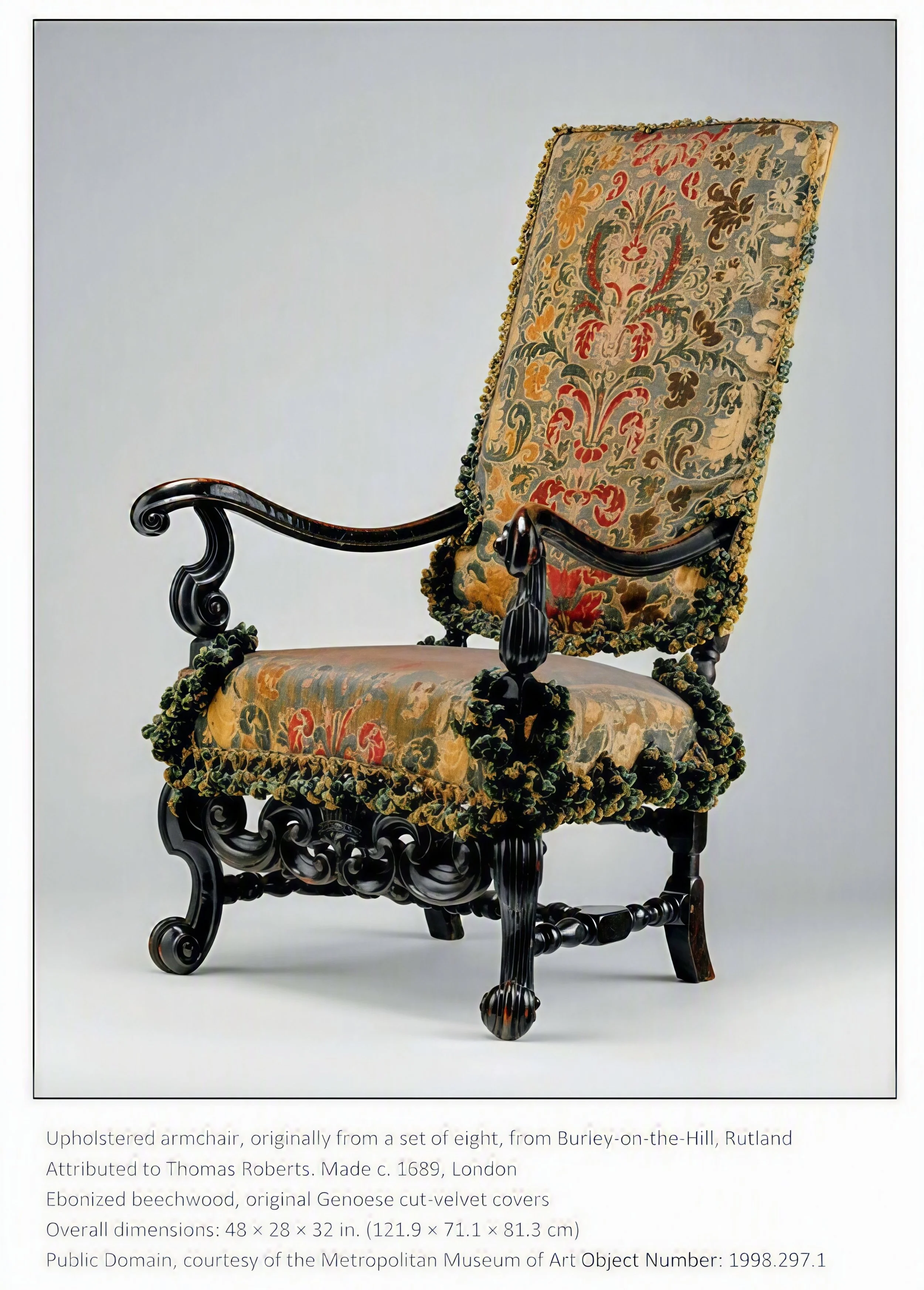
Many students yawn their way through the Baroque lectures. But the seventeenth century in the West was the moment when the art of furniture-making truly came into its own. The affluence, demand, and taste of the Renaissance gave rise to tremendous levels of skill by 1600. During the Age of Absolutism, when displays of power and wealth were essential to the Vatican and the great royal houses of Europe, joiners and cabinetmakers produced the most technically advanced, exquisitely composed pieces—objects intended, like the spaces they inhabited, to inspire awe. Objects like the Pierre Gole cabinet recently featured on my Instagram, for example—and this chair.
Most students groan when a piece like this appears on the screen. To them, this style, this period, is completely irrelevant. These are the pieces they hurry past in museums on their way to "the good stuff." But stop for a moment. Pretend you've never seen a thousand of these chairs before. The Age of Absolutism demanded boldness, strength, and dynamism. Communicating those qualities while maintaining an overall sense of harmony and elegance is no small challenge—and few pieces better demonstrate it than this magnificent English armchair by Thomas Roberts, the leading chair maker in London during the late seventeenth century.
Look at this chair. Really look. Its striking presence is the result of many carefully orchestrated decisions: the richness created by the depth and sheen of the ebonized wood; the value and glow of the original silk upholstery; the quality, movement, and sculptural vitality of the carving, which dissolves into great plumes of passementerie; but most importantly, the proportions.
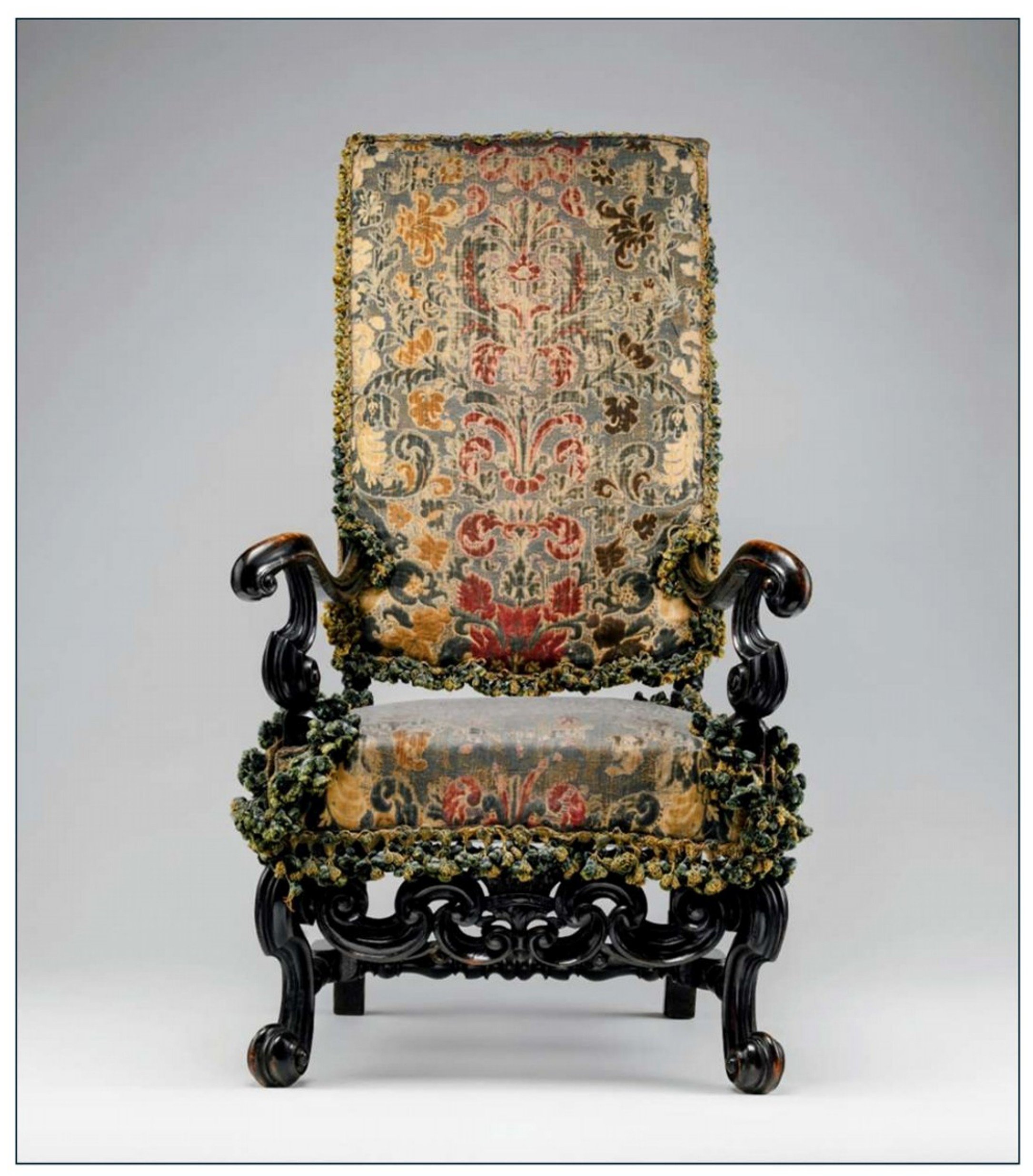
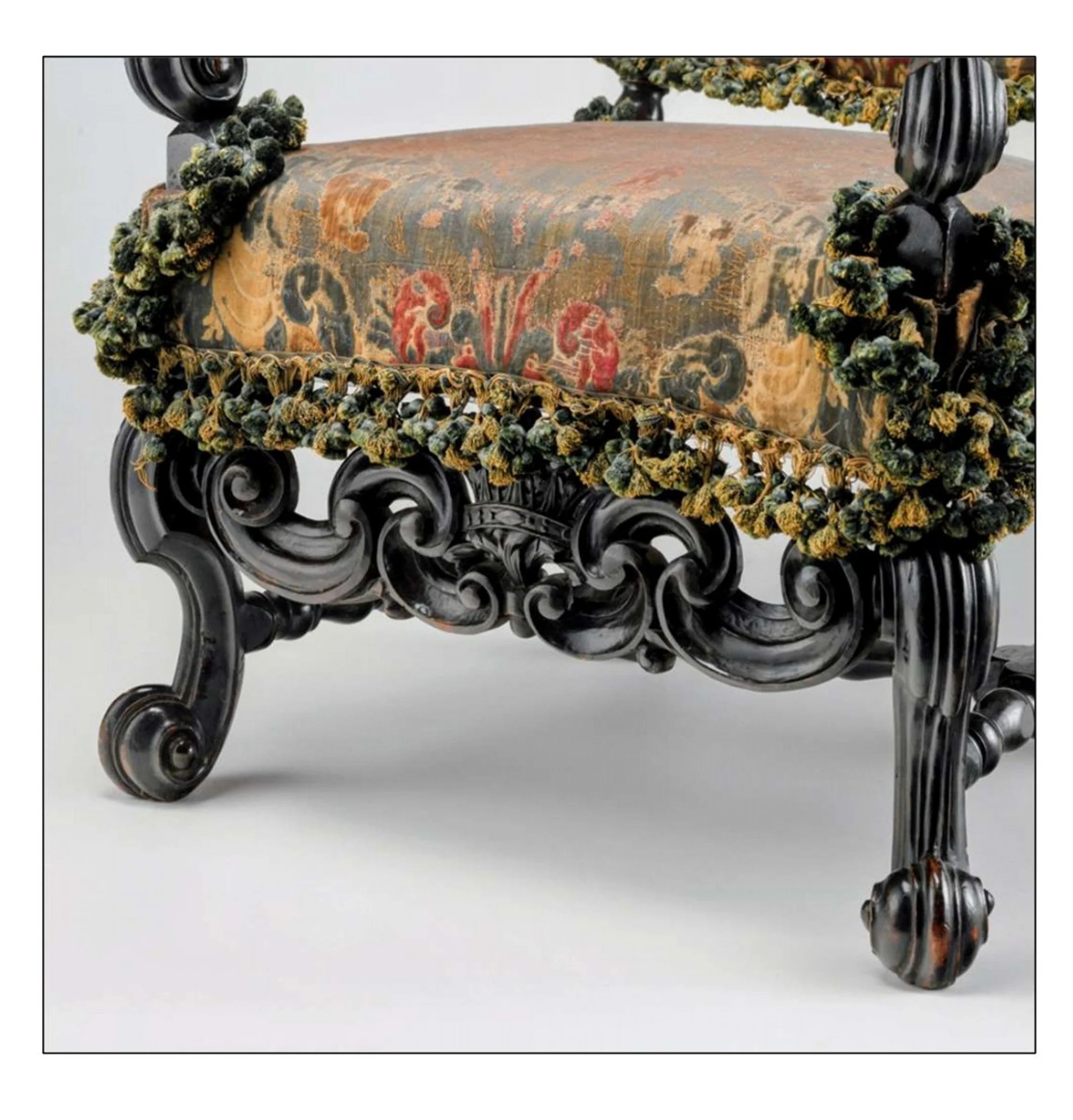
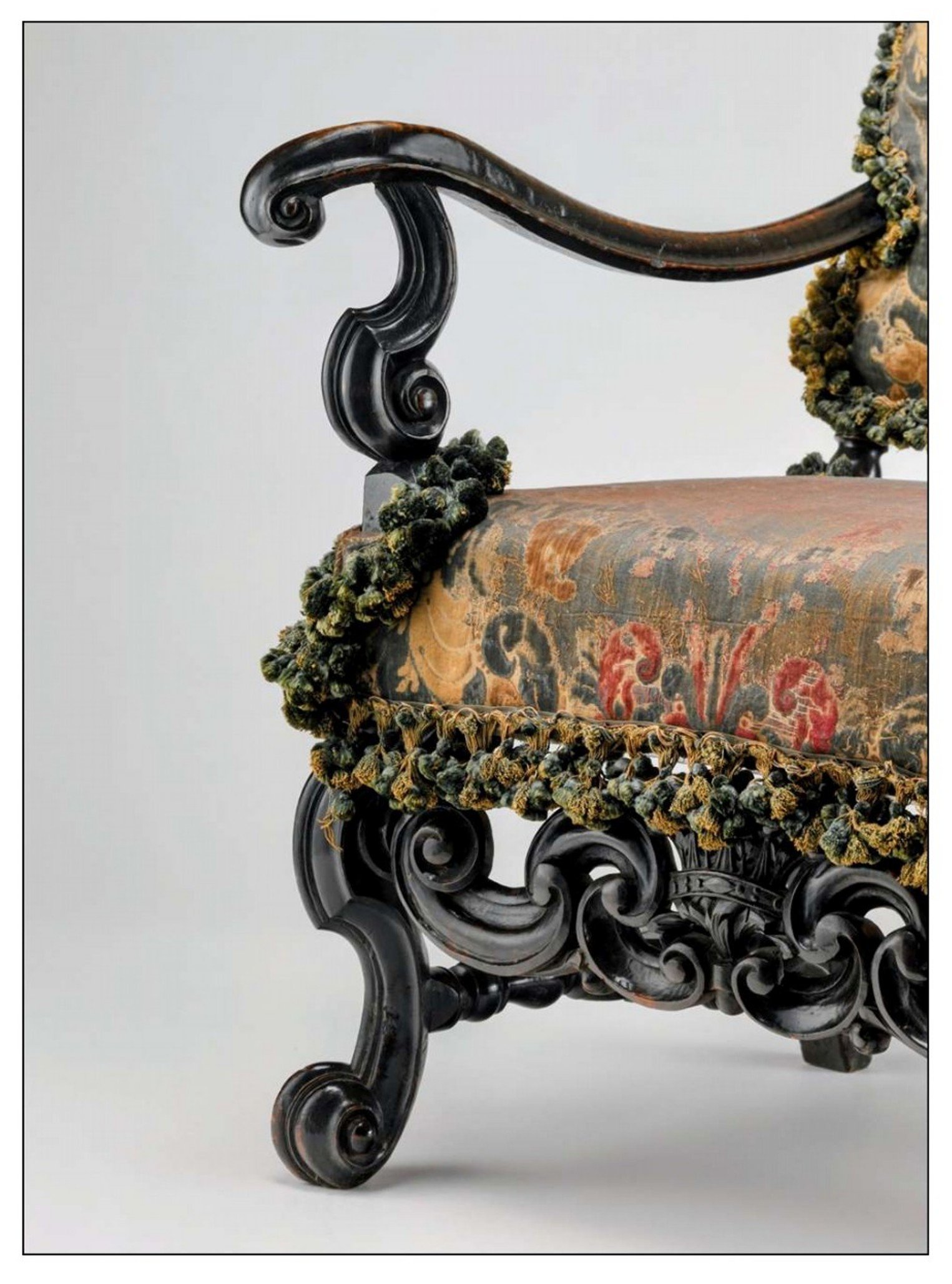
Many Baroque chairs communicate power through sheer mass. This one doesn't. Elegant is the only word I can think of to describe the sweep and proportion of the arms. Like similar chairs, the back is tall, straight, and square, communicating power, grandeur, and the formality of court life. But this back is slim, not heavily padded.
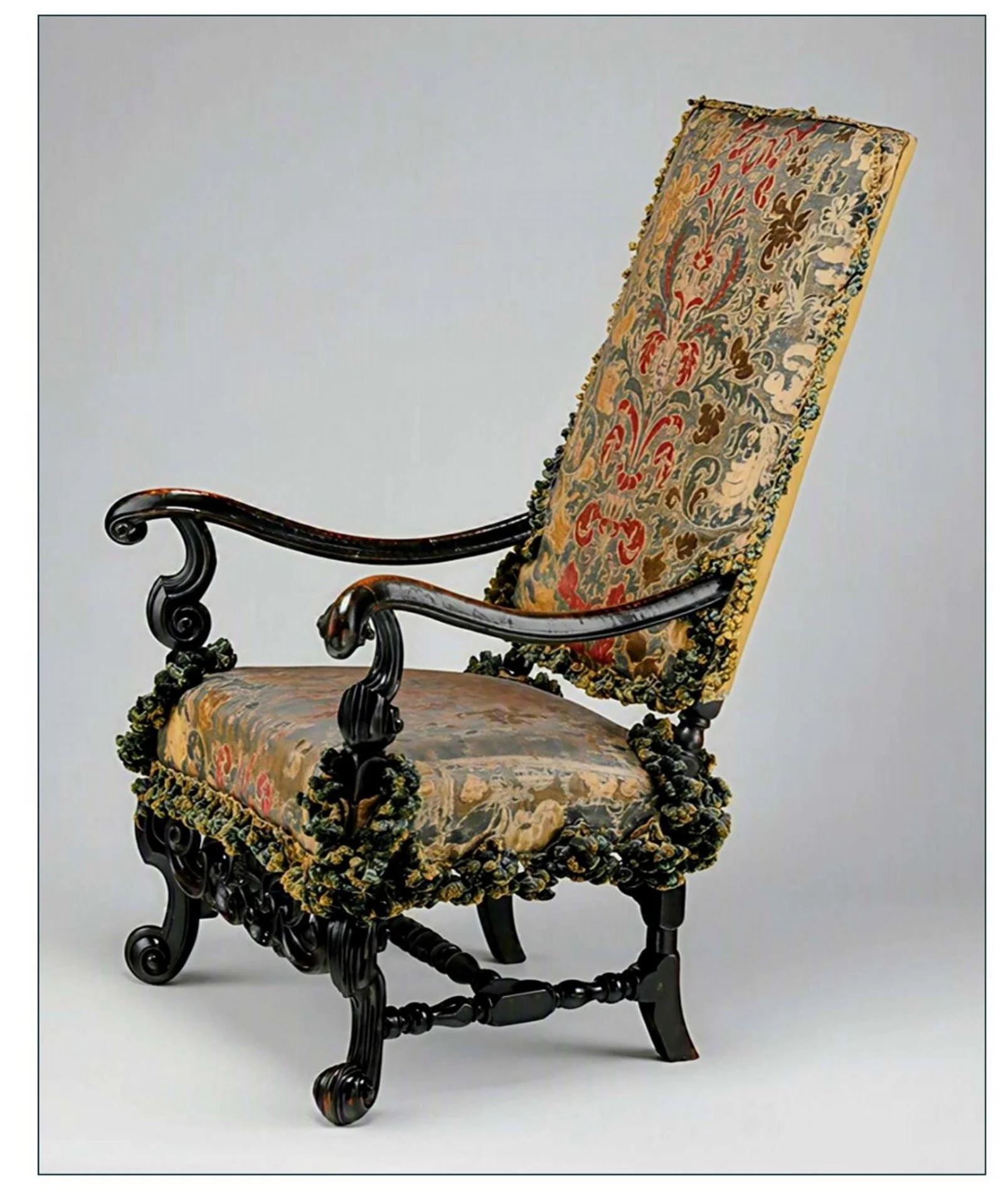
Baroque and elegance are not commonly paired terms. Here we see many of the defining characteristics of the Baroque: bold, three-dimensional carving; movement; richness; grandeur. Yet all is pervaded by an elegance derived from exacting attention to proportion, creating a chair that feels remarkably light and refined for its time.
This is most likely the result of the influence of Daniel Marot, the great Huguenot designer from the court of Louis XIV, who became designer to the English king and queen, bringing with him the French sensitivity for restraint and elegance.
One point I make often to my students is that great design—not the best, but great design—is often the result of the reconciliation of opposites. Strength with elegance. Richness with restraint. Boldness with refinement. Grandeur with grace. Creativity itself is often defined as bringing together things that normally seem incompatible—seeing connections that others miss. Which points to something else I tell them often: looking carefully at, studying, and analyzing great works of art and design is one of the very best ways to develop your eye for quality while expanding your own creativity.
And here, in Baroque England, we have a superb example of both, quietly waiting in a dusty corner of the museum for you to discover, in gallery 509 of the Metropolitan Museum of Art.
If you enjoyed this Case Study, I invite you to subscribe below and join me on Instagram @RyanArtAndDesign, where we continue exploring what the rich history of art and design has to offer contemporary designers.
Related reading: Connecting the Dots: Why Design History Matters to Practice
Be sure to sign up below to receive guidance, visual insights, ideas, and resources to help you develop a deeper way of seeing and understanding art and design. (Coming soon!)
