
Connecting the Dots: Why Design History Matters to Practice
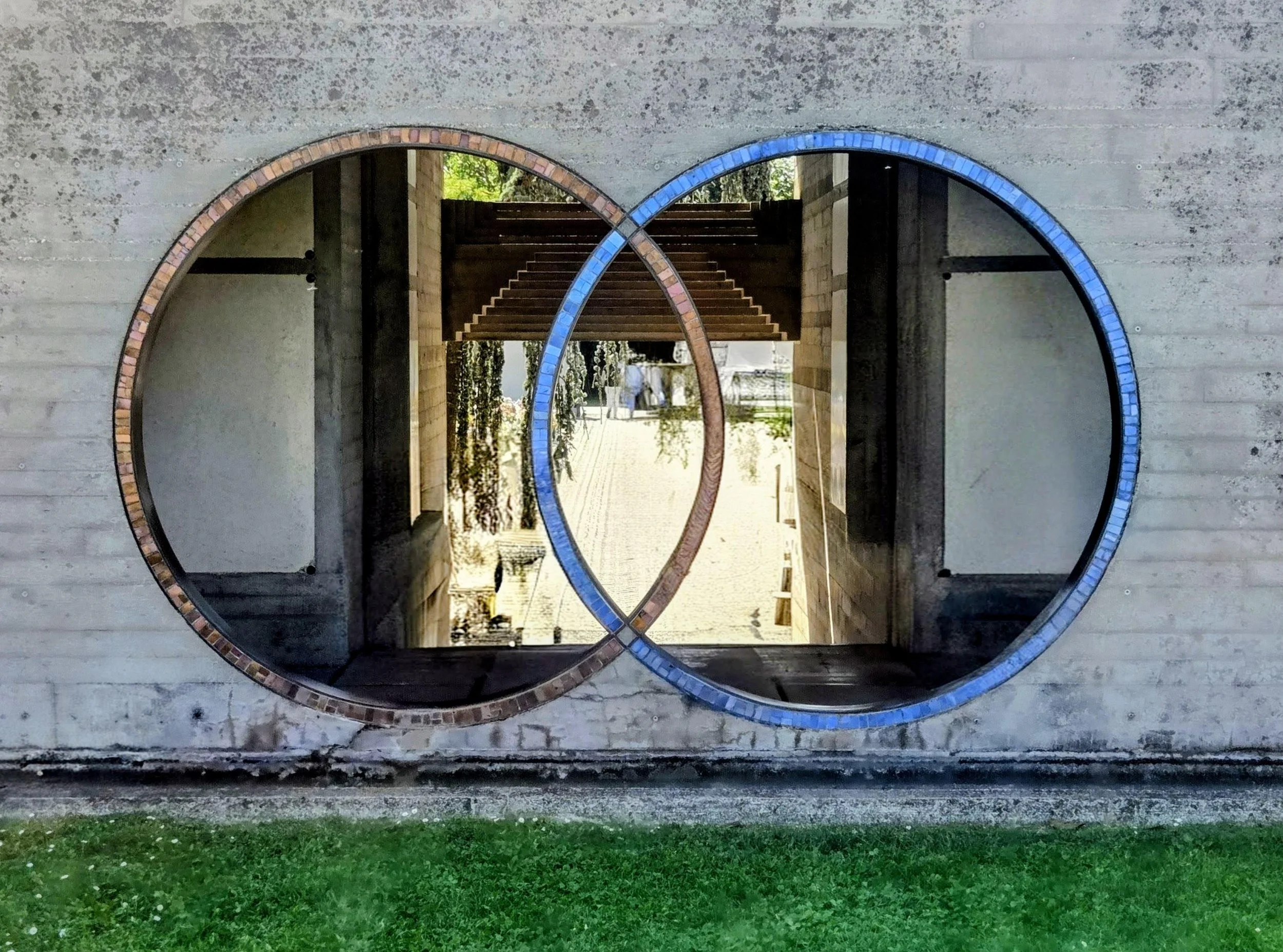
Detail from Brion Cemetery. Carlo Scarpa. c. 1975. Treviso, Italy
The Challenge
Developing the theme of this year's Study Abroad tour was a project in itself.
The result emerged from what initially seemed like a lopsided itinerary across Athens, Venice, and the Veneto. The Parthenon and Palladio made perfect sense. Both are foundational figures in the Classical tradition, linked by a clear historical thread stretching from ancient Greece to the Renaissance. But I couldn't resist adding another architect to the mix: Carlo Scarpa.
For a group of interior designers and architects to be in Venice and the Veneto and not experience Scarpa would be a colossal missed opportunity. The problem was how to work him into the story.
Scarpa seemed completely out of place on a trip focused on ancient and Renaissance Classicism. How could I justify pairing a twentieth-century architect with the Parthenon and Palladio? Could I find any kind of meaningful connection between them? If I wanted this itinerary, I felt I had to find it.
And it occurred to me that if I could find a thread connecting them, perhaps the students could find it as well. The searching for it, alone, would be a valuable exercise in design thinking. That realization eventually became the theme of the trip: Connecting the Dots.
Rather than presenting answers in advance, I challenged the students—and myself—to look for relationships. Could we find common ideas beneath very different forms? Could we discover a conversation stretching across two thousand years of design history? In short, were there dots worth connecting? Indeed, were there dots at all?
The Role of Design History
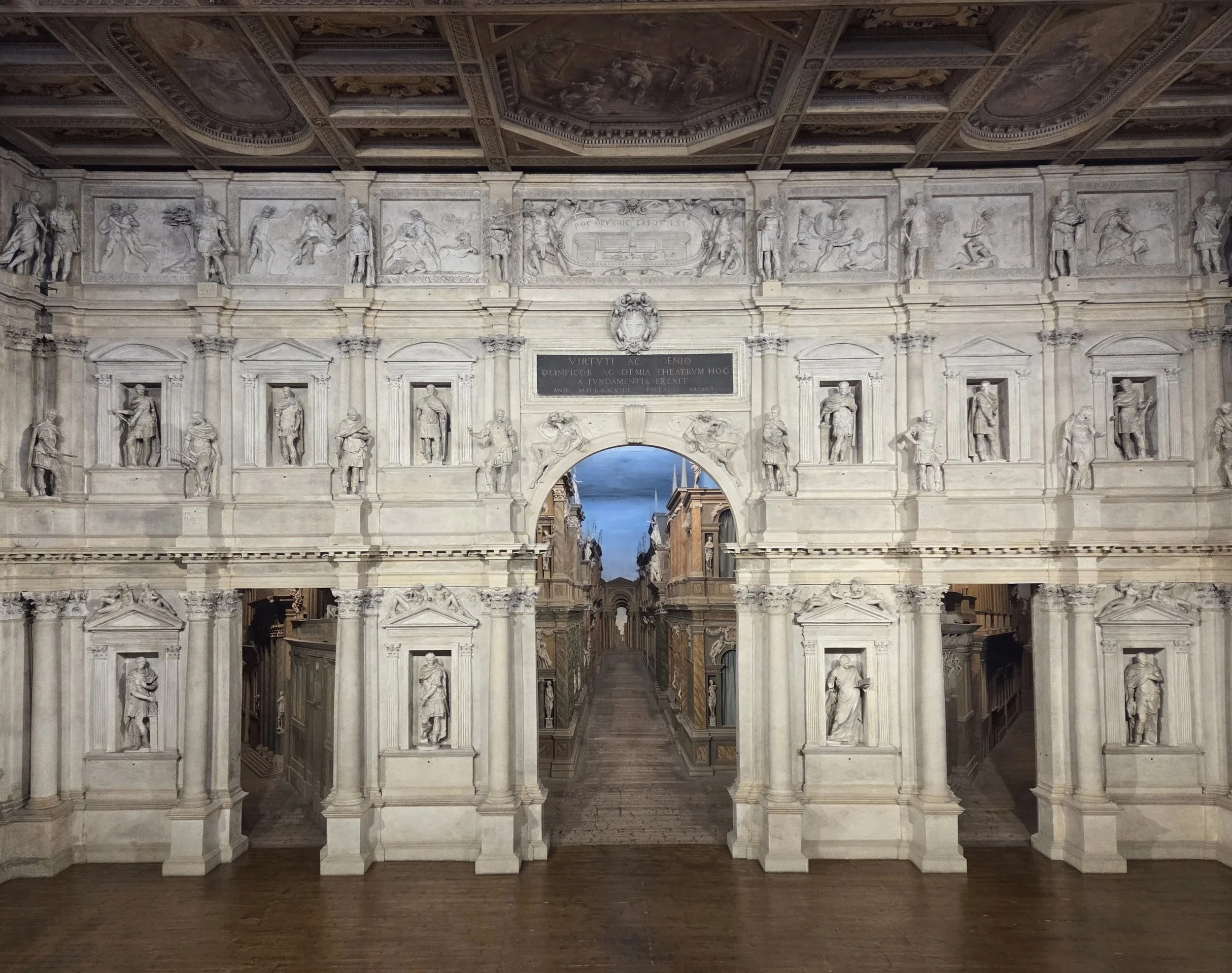
Teatro Olimpico, Vicenza, Italy. Designed by Andrea Palladio, completed by Vicenzo Scamozzi, 1580–1585.
One of the most rewarding aspects of studying design history is recognizing that it is not simply a sequence of events, but an ongoing conversation. Across time and place, designers have wrestled with many of the same fundamental questions: How do we transform practical requirements into experiences that move and inspire us?
How do we give form to ideas?
What changes from one period to the next are the answers. The Greeks answered these questions one way. Gothic builders another. Renaissance architects another. Modern designers yet another.
The forms differ. The materials differ. The visual language differs. Yet beneath those differences lies a common challenge: How do I achieve my functional, creative, and conceptual goals? Design history is the record of the attempts to meet that challenge.
It is not just the story of what things looked like. It’s the story of why they look like that.
Design history allows us to see how designers throughout history have used line, shape, color, proportion, material, texture, space, and composition to communicate ideas, values, beliefs, and experiences.
It is a vast collection of case studies in creative problem-solving -- a practical guide to how designers make meaning visible.
What do I want this design to express? What values do I want it to embody? How do I want it to shape human experience? How can I unite the individual parts to create a meaningful whole? And perhaps most importantly: How do I achieve this?
These are not historical questions. They are design questions. They are the same questions architects, designers, and artists have been asking for centuries.
Design history matters because it allows us to study – and learn from -- the answers.
It provides a vast collection of examples—successful, influential, inspirational, and enduring examples—of how creative people have translated ideas into form. Through line, shape, color, proportion, material, texture, space, and composition, they sought to communicate values, beliefs, aspirations, and experiences.
The Through-Line
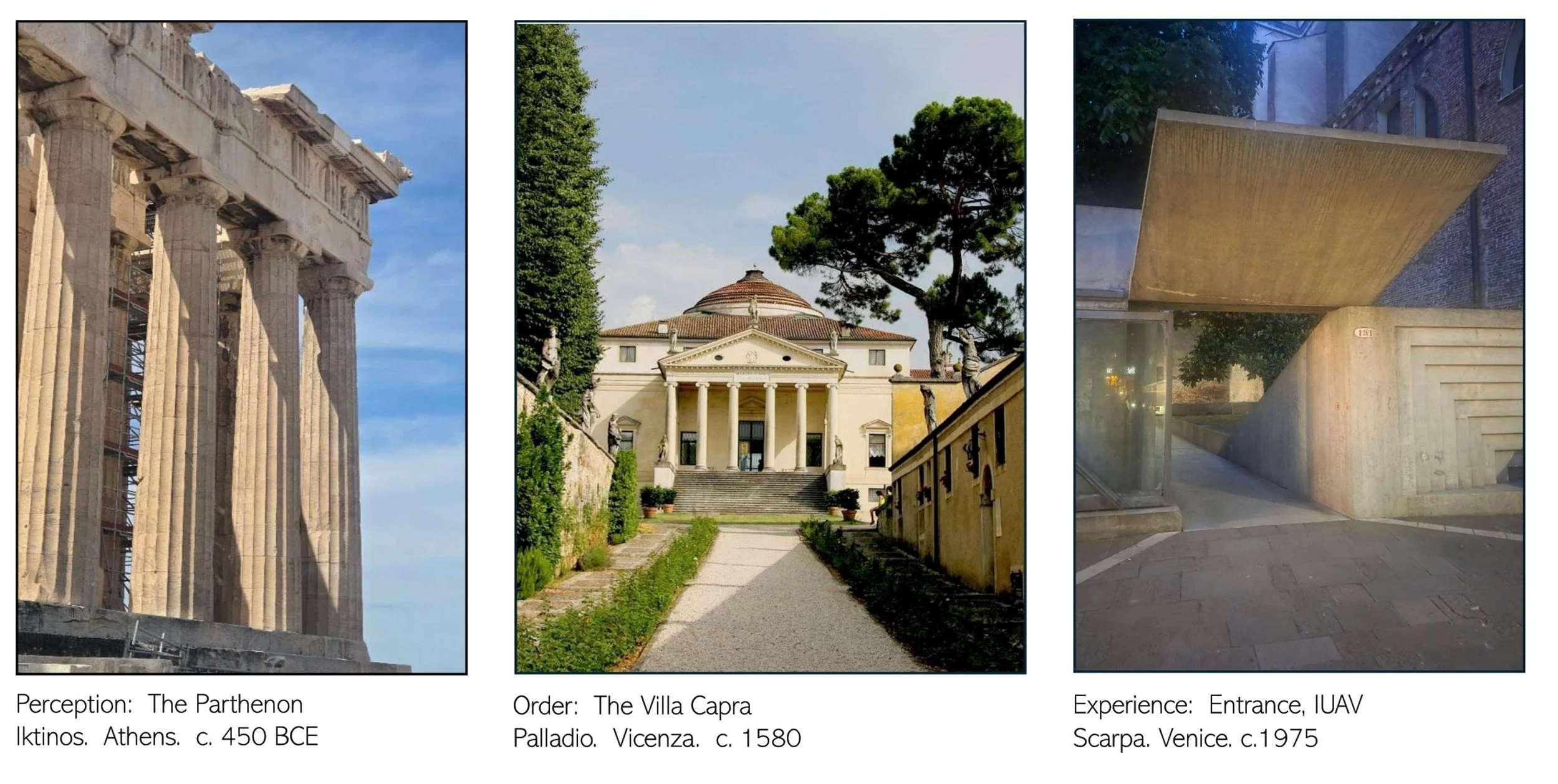
Of course, after days of pondering and digging, the answer emerged by returning to the basics: What did these three individuals want to achieve? What were they trying to express? What were they concerned with? What problem were they trying to solve?
I knew the connection I was looking for was not stylistic. It wasn't about columns, proportions, materials, or architectural details. It was about the questions these designers were asking—and how they were answering them.
The more I considered the work of Iktinos, Palladio, and Scarpa, the more I realized that all three were engaged in the same essential act: adjustment. Each was refining, editing, correcting, balancing, and shaping form in service of an idea—a concept, if you will.
For Iktinos, the concern was perception—how a building is seen.
For Palladio, it was order—how space and proportion can be understood.
For Scarpa, it was experience—how materials, details, and space are felt.
Different concerns. Different answers. Yet all three relied on the same process of careful refinement. In a word: calibration.
Calibration. Designers adjust, refine, edit, simplify, emphasize, and balance. We make countless small decisions in service of larger intentions. This is how we do it.
For Iktinos, Palladio, and Scarpa, those adjustments reflected different ideas about where meaning resided.
What changed from one designer to the next was not the need for calibration, but where it was applied.
Where Meaning Resides
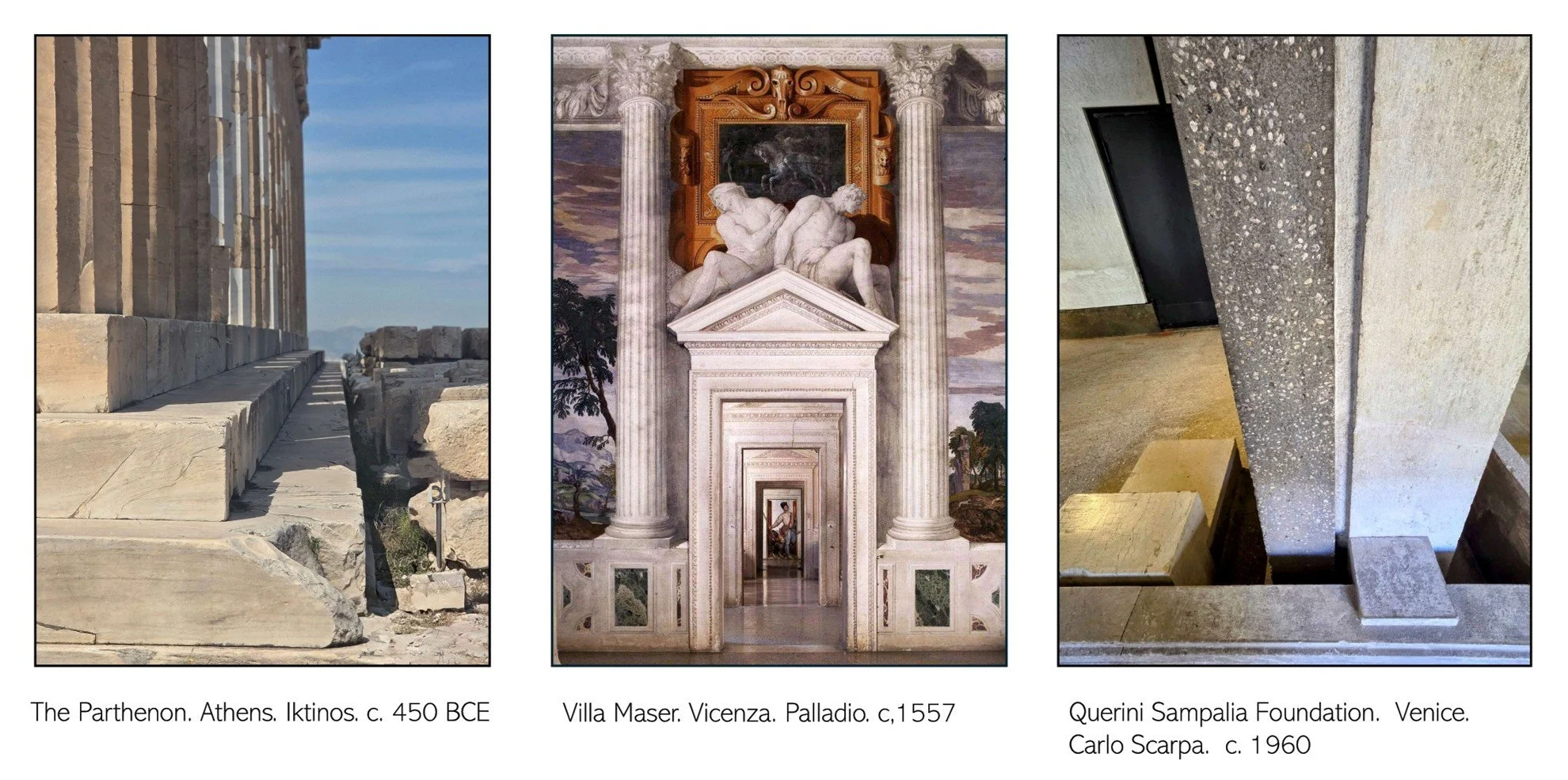
For Iktinos, meaning lay in perception. The Parthenon is famous for its optical refinements—subtle adjustments that correct for the imperfections of human vision. Columns swell slightly. Horizontal lines curve almost imperceptibly. Nothing is left to chance. Meaning emerges through visual harmony and the pursuit of an ideal appearance.
For Palladio, meaning lay in understanding. Influenced by the humanist ideas of the Renaissance and his study of both Vitruvius and Roman architecture, Palladio sought to create buildings that made order visible. Proportion, symmetry, hierarchy, and harmony were not merely aesthetic devices; they were expressions of a larger belief that the world possessed an underlying order that could be understood and made visible.
His villas are carefully calibrated systems in which each part contributes to the intelligibility of the whole. Complex realities are edited, organized, and clarified. Meaning emerges through proportion, geometry, and mathematical relationships that produce clarity, balance, and a sense of order—qualities understood during the Renaissance as reflections of the Divine.
For Scarpa, meaning was found in experience. Rather than pursuing ideal appearance or ideal proportion, he focused on the encounter between people, materials, and place. Light, water, texture, detail, movement, and craft become vehicles of meaning. His work asks us not simply to look or to understand, but to experience, to feel. Meaning emerges through touch, memory, discovery, and the heightened awareness that comes from moving carefully through space.
Synthesis
At first glance, these approaches seem very different. One seeks visual perfection, another intellectual order, another sensory awareness. Yet beneath these differences lies a common process.
Each begins with an idea. Each seeks to express something meaningful. And each relies on countless acts of adjustment, refinement, and judgment to bring that idea into form.
The forms differ. The answers differ, but the creative act that each relied upon remains remarkably consistent. Only its focus shifts—from the eye, to the mind, to the body.
What this Means for Practice
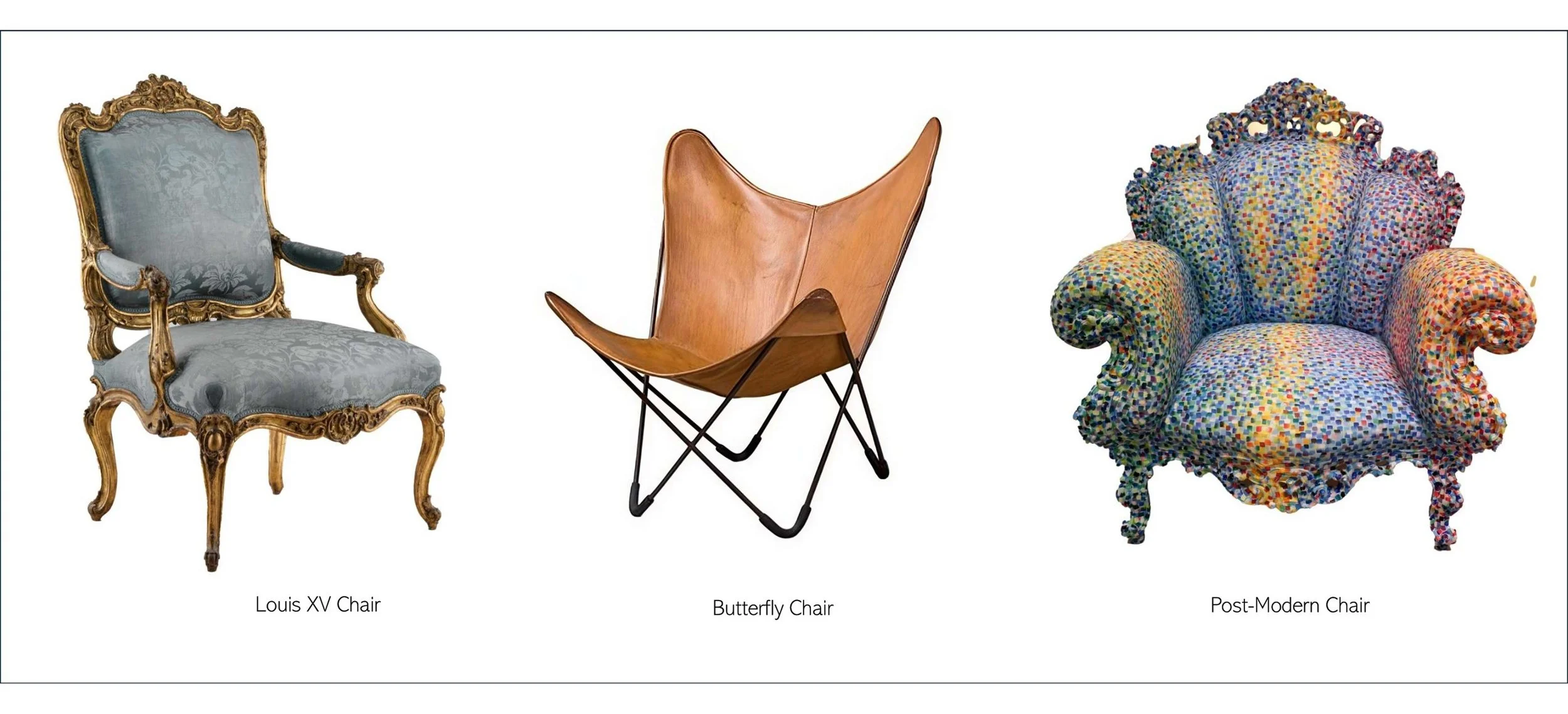
When we study great work, we are not searching for styles to imitate. We are learning how designers think.
Design history is a wonderful source of inspiration, but its greatest value lies in helping us understand why certain works move us, why certain solutions endure, and why certain ideas continue to resonate across time. The most valuable question is often not, "What inspires me?" but "Why does this inspire me?" And most important, “How is it doing that?”
Answering those questions requires analysis. We must move beyond our personal preferences and ask what a design is communicating, how it is communicating it, and why particular choices produce particular effects.
History provides an ideal environment for this kind of investigation. In most cases, we already know what historical designers were trying to communicate. We know the values they wished to express, the experiences they hoped to create, and the ideas they sought to embody. The challenge is not discovering their intentions, but in understanding how they achieved them.
What choices were made? What relationships were created? How did line, shape, color, proportion, material, texture, space, and composition work together to communicate meaning? Design history gives us thousands of opportunities to practice this kind of analysis.
And the more you do it, the better you become at doing it in your own work.
The more examples we study, the better we become at recognizing relationships, evaluating choices, and understanding how form communicates meaning. In other words…
…we begin to develop design judgment—a sense of creative discernment that, over time, becomes second nature and improves our own work.
Design history matters because it is one of the most powerful tools we have for developing that judgment.
The goal, then, is not simply to accumulate knowledge. It is to develop the ability to see connections—to recognize relationships between ideas, forms, intentions, and experiences. The more connections we can recognize, the richer our own understanding becomes.e
Creativity, after all, is often nothing more—and nothing less—than connecting the dots.
Related Reading: Creativity in Design: From Inspiration to Intention
Related Reading: Creativity in Design: Before the Spark
Related Reading: The Elements and Principles of Design: What are they? And why do they matter for interior designers?
Related Reading: Design Concept in Interior Design: Meaning, Method, and Creative Depth
Be sure to sign up below to receive guidance, visual insights, ideas, and resources to help you develop a deeper way of seeing and understanding art and design. (Coming soon!)
