
Discovery Before Commitment
Why interior designers must draw by hand before going to CAD
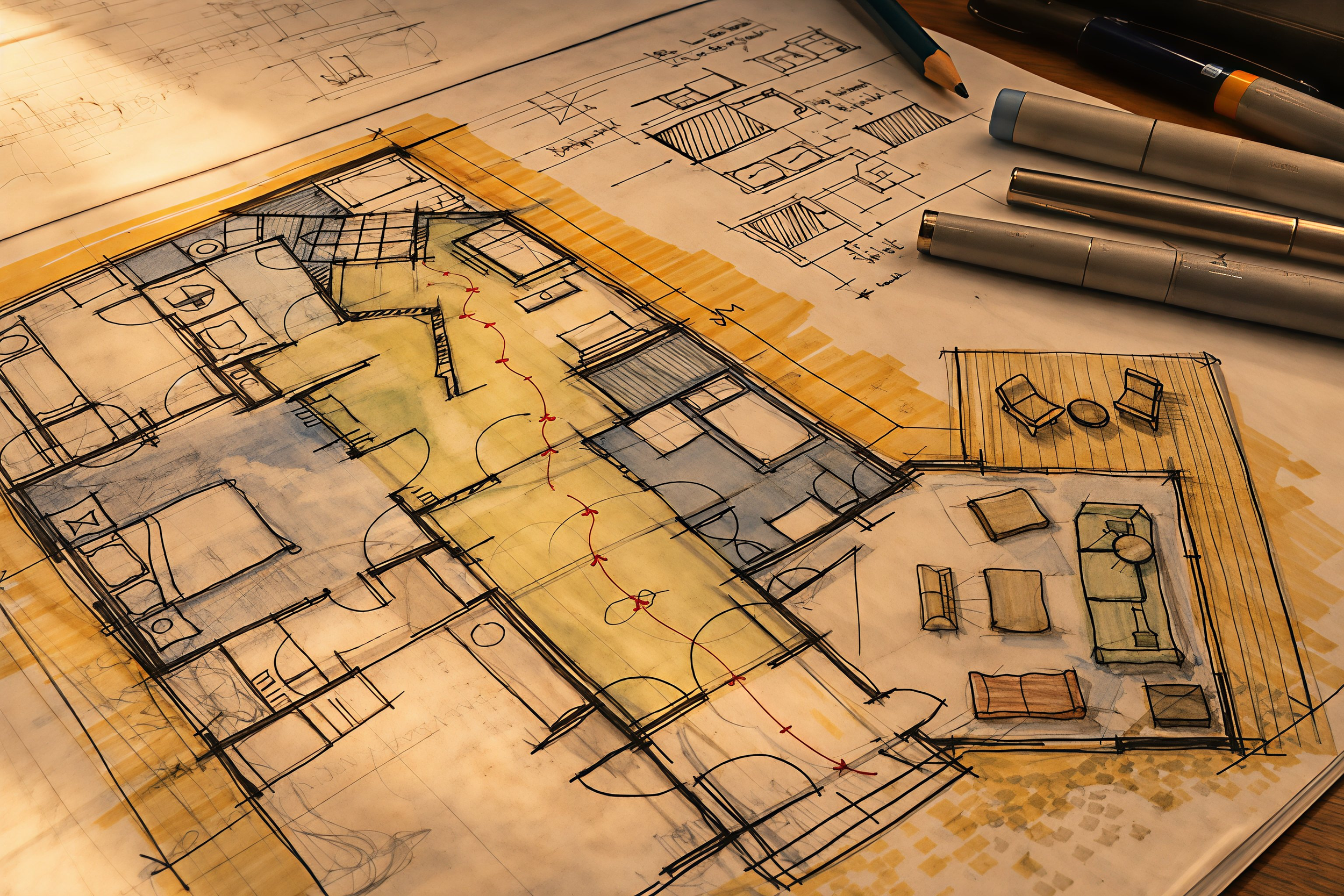
This is designing.
Hand sketching versus CAD
In every design studio, a familiar question is eventually asked: Why can’t we just start in CAD? It’s a reasonable question. Digital tools are powerful, efficient, and precise. They produce clean drawings quickly. They look professional. They feel productive.
But design does not begin with polish. It begins with uncertainty. And uncertainty requires space and fluidity. A simple distinction clarifies the issue:
Design makes the decisions. Drafting records them.
CAD is an extraordinary tool that brings clarity, coordination, and precision to work that has already been considered. But preliminary design is not about resolution. It is about searching. In the early stages of a project, proportions are being tested; spatial relationships are being discovered; circulation is being questioned; options are explored and abandoned. Questions are still more important than answers.
When students move too quickly into digital drafting, the tool can create the illusion that the best decisions have been made simply because the lines look precise. But precision is not depth. A drawing can be accurate and still be superficial, unexamined.
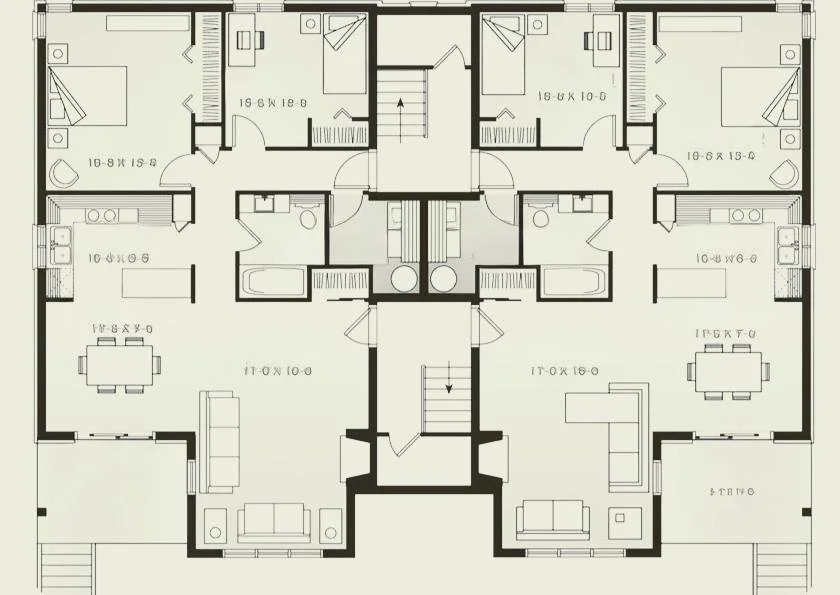
Do you see the flaw? (Drawing adapted from a real estate ad for educational purposes)
The Brain Works Differently by Hand
When students sketch by hand, something important happens cognitively. The brain processes movement, scale, proportion, and spatial judgment simultaneously. The hand is making micro-decisions constantly. Thinking and making happen at the same speed.
And imperfection plays an important role. Because a sketch is provisional, it invites iteration without fear. Nothing feels permanent. Nothing feels precious. When students jump directly into CAD, the experience changes.
The tool demands precision before thought has matured. Attention shifts to commands, snapping, alignment, layers, and file management. The drawing begins to look clean very quickly, which creates the feeling of productivity – and conclusion. But the creative thinking often hasn’t deepened yet.
Sketching is a discovery tool. CAD is a commitment tool
Working on Trace Keeps Thinking Visible
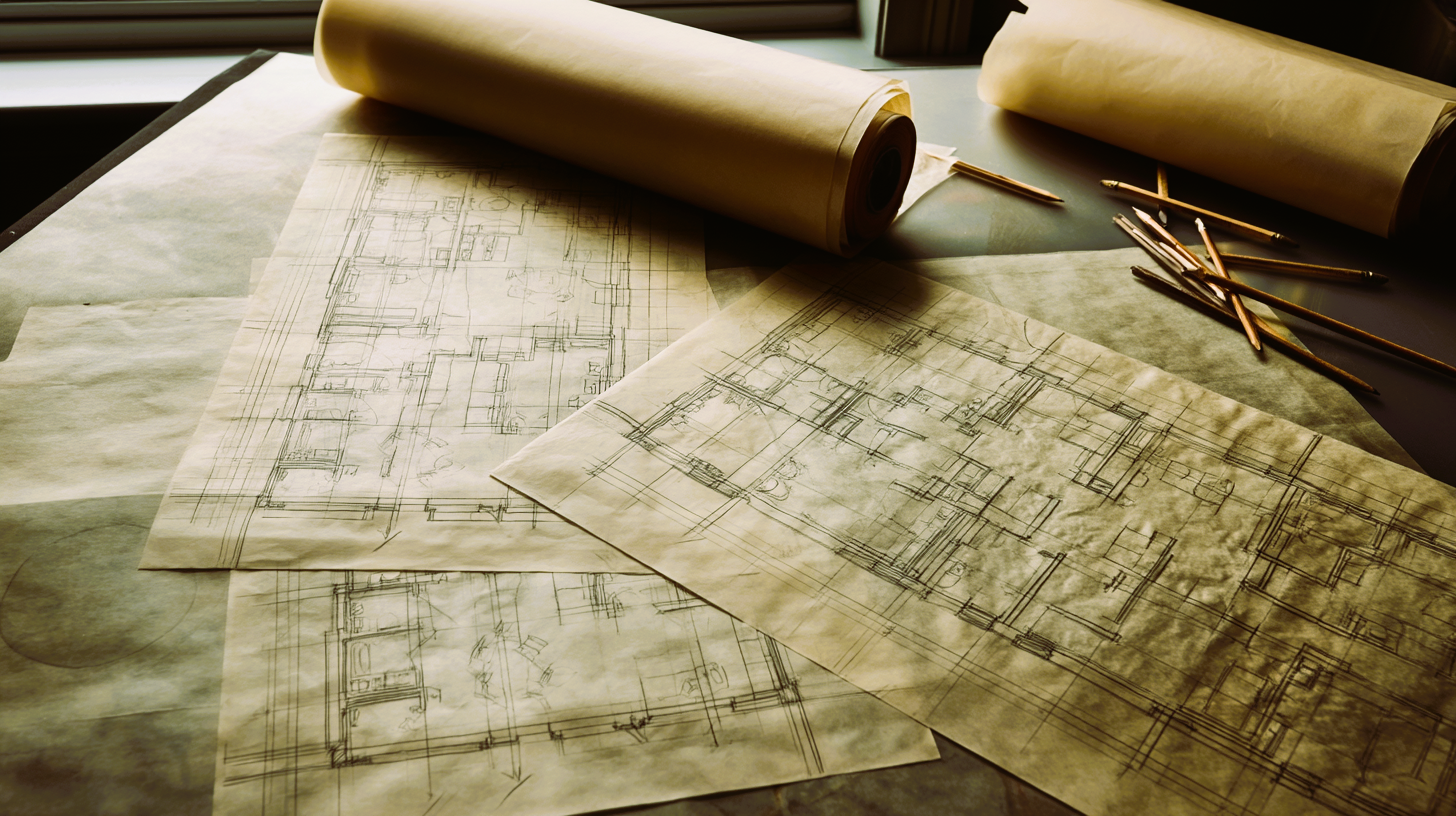
Laying trace over an existing drawing is the best way to revise, re-design.
There is a particular rhythm to pencil on trace. One idea appears. Another is layered on top. Five possibilities can coexist. Nothing is erased. Nothing is final. Thinking remains visible. Early design is rarely linear. It circles, revises, contradicts itself. It moves forward and back. It is spatial, rhythmic, and iterative. Trace accommodates that rhythm.
Digital tools, by contrast, introduce precision too early. Alignment is required before relationships are fully understood. Lines appear crisp before proportions are tested, and the appearance of resolution replaces the work of discovery.
Hand Drawing Encourages Risk

Don’t be stingy with trace! It was made to be thrown away. That’s its reason for being.
Creativity requires experimentation.
On trace, experimentation is easy. You can throw something down in ten seconds. Layer five options. Flip the trace. Tear it off and start again. There is almost no psychological cost.
In CAD, the stakes feel higher. Files become objects. Students begin to protect their drawings rather than explore alternatives. Revisions feel heavier.
Layered trace lowers the cost of change, and that encourages risk.
The Speed of Thought Matters
There is also a rhythm to hand-sketching that digital tools struggle to match. Early design thinking is messy, associative, spatial, and fluid. Ideas evolve through quick gestures and adjustments. Even small pauses in CAD — selecting commands, snapping lines, managing layers — interrupt this flow.
You cannot think fluidly if the tool forces linear steps. One way to describe the difference is this:
Design is jazz. CAD is orchestration. Both are necessary, but not at the same moment.

Lean into it.
The Body Understands Space
There is another dimension that designers often feel but rarely articulate. Drawing by hand engages the body. The arm measures distance. The eye constantly recalibrates proportion. The hand adjusts scale intuitively.
Spatial understanding is not purely intellectual. It is physical. Research in cognitive science supports this: manual drawing strengthens spatial reasoning because motor activity reinforces perception and memory.
This matters especially in interior design. Scale is not abstract; it is lived. When designers sketch by hand, the body participates in understanding space. Digital tools can sometimes distance the designer from that embodied sense of proportion.
The Honesty of the Hand
A weak idea drawn cleanly can look convincing. Poor proportion rendered with perfect line weight may appear resolved. Circulation problems can hide beneath polish. The drawing can outpace the thinking. Hand sketches are honest about the stage of thinking they represent.
Hand-sketching does not permit this illusion. On trace, awkwardness reveals itself immediately. Proportion is judged in real time. The work looks exactly as developed, as it truly is. There is an honesty in that. And honesty is essential to growth. Beginning with hand-sketching protects protects the integrity of the design process.
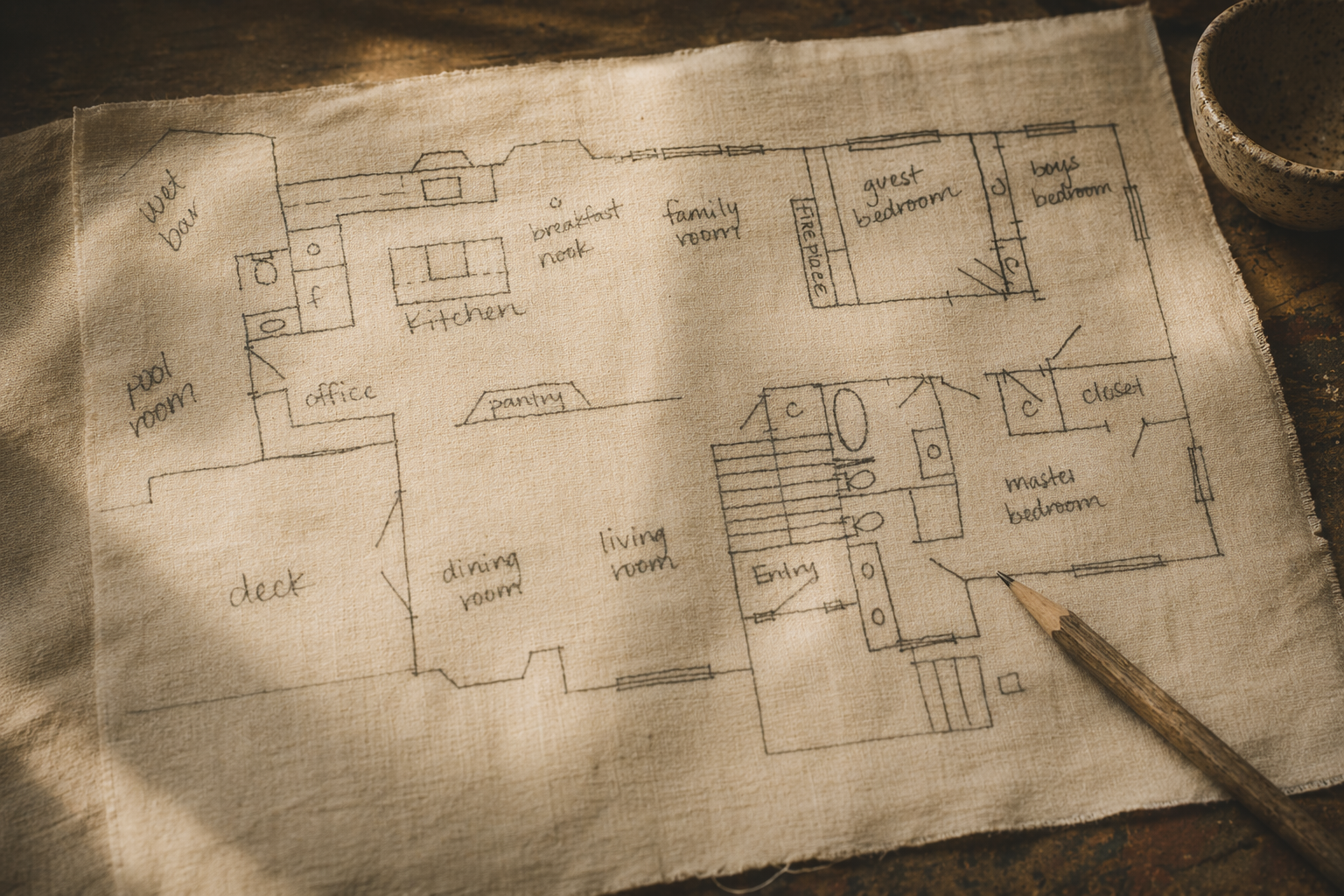
Besides, there is a quality to hand-drawing that makes the images come alive in a way computer-generated drawings cannot. Designers often keep these.
The Real Process of Creativity

Emptying the mind, letting it wander, daydreaming — all create space for ideas to arise from the “data” you’ve absorbed.
Great ideas and solutions sometimes come as a sudden flash — a brilliant idea appearing fully formed. Inspiration can feel sudden. It may seem to arrive out of nowhere -- while taking a shower or a drive. But what feels like lightning is usually the visible tip of a deeper iceberg -- a longer process. Creative work typically unfolds in stages:
Searching → Incubation → Insight → Commitment
Searching involves sketching, tracing, testing possibilities, and gathering visual material. Incubation happens quietly over a span of time -- that may be an hour, or a week, or a month, or more -- as the mind reorganizes what it has absorbed.
Insight is the moment when the pattern begins to emerge.
Only then does commitment make sense. If you skip the searching, there is nothing meaningful to incubate. If you commit too early, you stop the process before it has done its work.
Discovery Before Commitment
Professional designers do not reach for the most powerful tool first. They reach for the most appropriate tool for the stage of thinking. In the early stages, that tool is often the most simple: pencil and trace.
In early design, the goal is not precision. It is possibility.

Sitting with pencil posed over paper is much more fertile ground for creative thought than holding a mouse and staring at a screen (IMHO).
Layered sketches encourage iteration. They allow the testing of multiple possibilities quickly, and keep the door wide open to unexpected discoveries. Only after the core ideas have been explored, tested, and clarified does it make sense to move into CAD for refinement, coordination, and presentation. In this way the sequence of tools reflects the sequence of thinking. Discovery precedes commitment.
The Discipline of Design
When students begin a big project, often under the pressure of deadlines in several classes, the temptation is strong to race to the finish line. To choose and commit quickly. But as one of my wise and talented colleagues always warns students: Don’t marry the first person you go on a date with. Meaningful design rarely emerges from the first idea. It grows from sustained exploration. Coherence does not appear by accident. It is earned through structured searching.
Conclusion
We sketch by hand not because it is traditional. We sketch because it protects the stage where ideas develop. Before lines become exact, they must become intelligent. Before drawings become clean, they must become clear.
Drafting is not design. Design begins much earlier — in the uncertain, exploratory space where we search before we decide. And for that work, pencil on trace remains one of the most powerful tools we have.
Related Reading: Creativity in Design: From Inspiration to Intention
Be sure to sign up below to receive guidance, visual insights, ideas, and resources to help you develop a deeper way of seeing and understanding art and design. (Coming soon!)
