
Before the Split: Pre-history and the Origins of Meaning
Before art. Before design. Before meaning had a name.
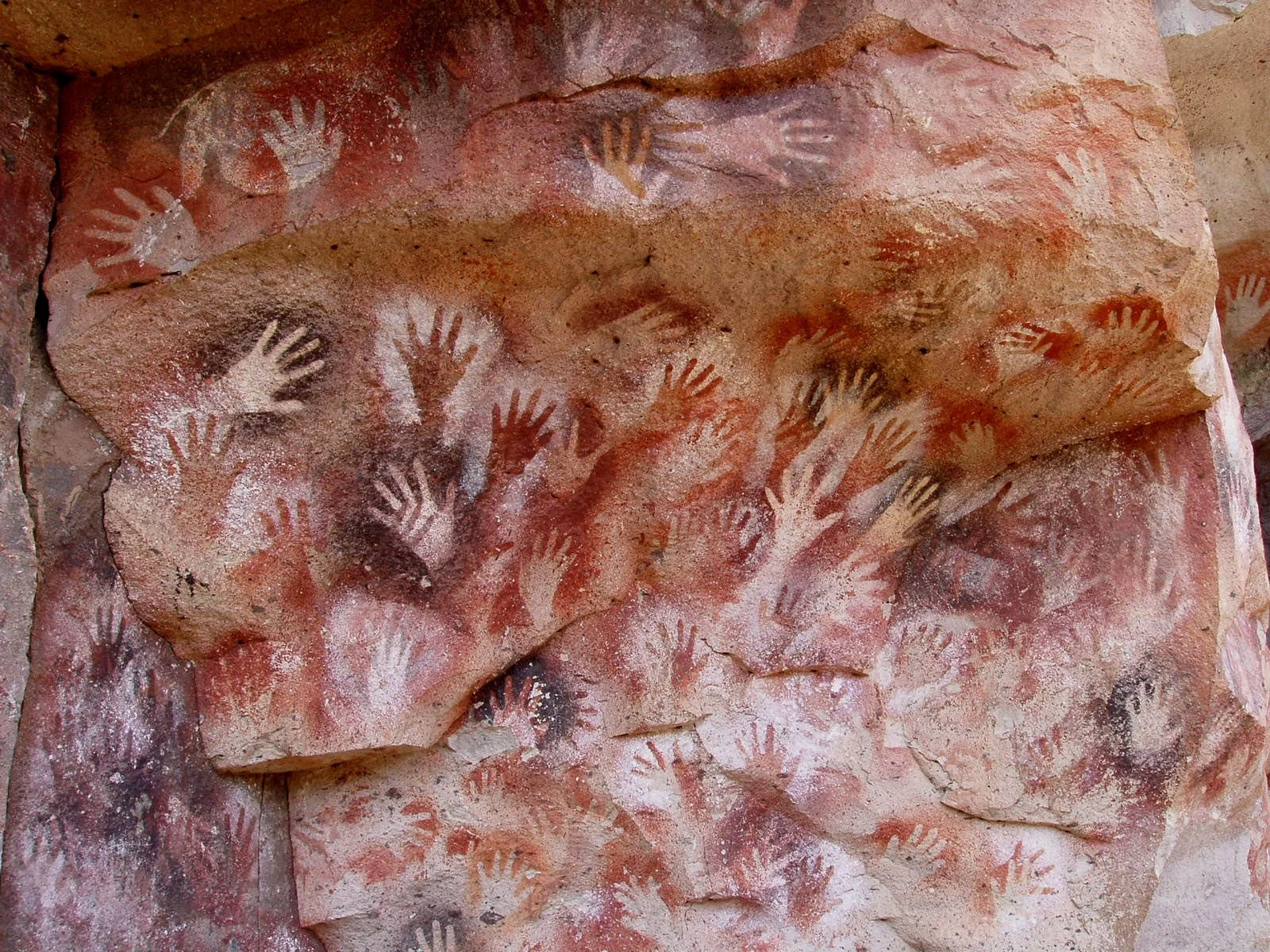
Hands at the Cuevas de las Manos. Santa Cruz Province, Argentina. c. 13,000–9,000 BCE
There is a point, far back in human history, before art and design were separate.
Before painting hung on walls.
Before objects were classified as useful or beautiful.
Before architecture. Before decoration. Before style. There was only making.
And in that making, a shift begins— from action to intention.
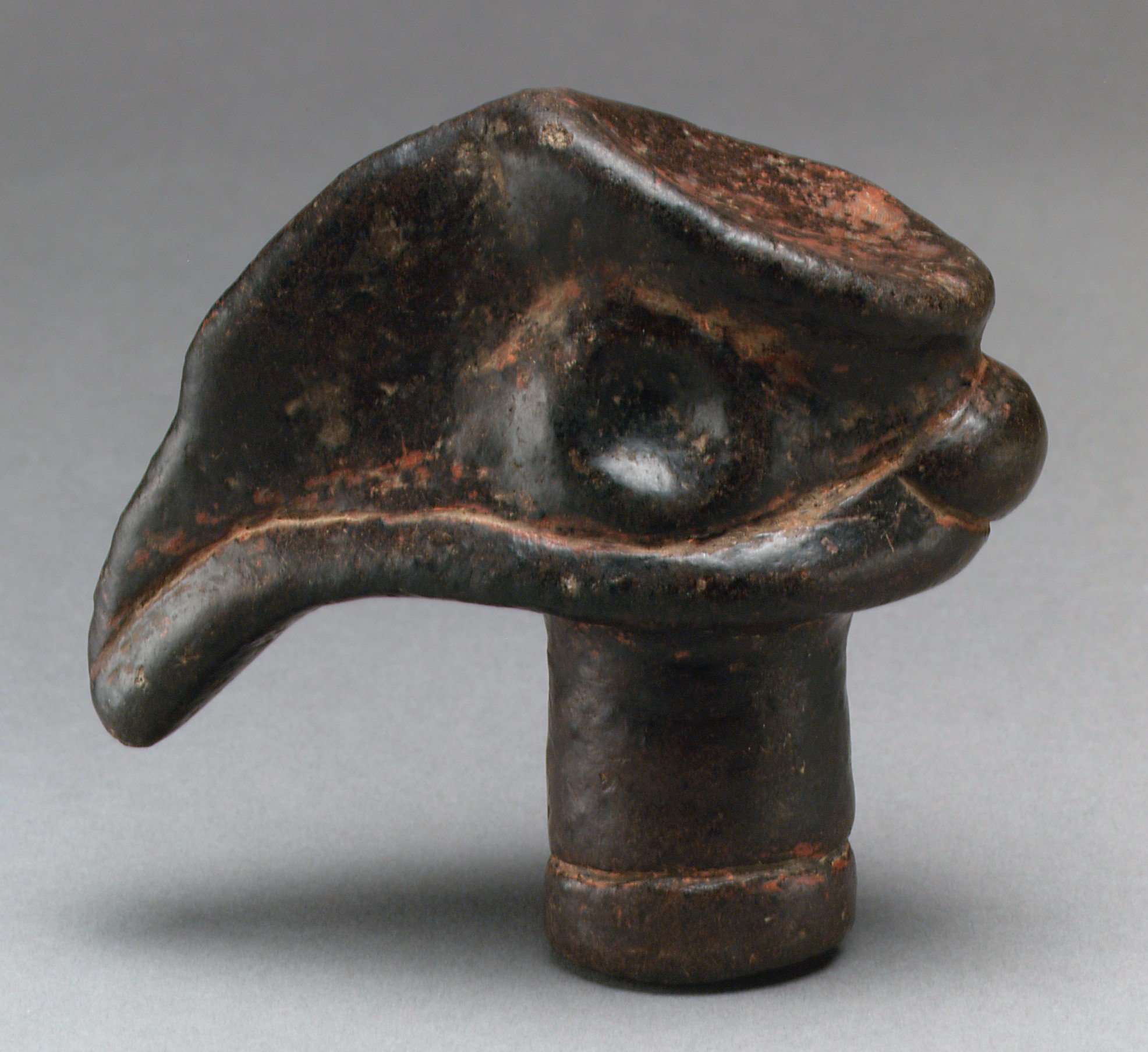
Abstracted bird form in stone. Morobe Province. Greenstone with ochre. Prehistoric.
When we look at prehistoric objects today—a carved figure, a painted cave wall, a string of beads—it is easy to misunderstand them. We are used to categories. We want to ask: Is this art? Is it design? Is it symbolic? Is it functional?
But those distinctions did not yet exist.
A handprint on a cave wall is not “art” in the modern sense.
A necklace is not “fashion.”
A carved object is not “sculpture” as we define it.
Instead, these objects belong to a world in which meaning, use, and expression are inseparable.
This is where the study of prehistory becomes essential—not as a timeline of early humans, but as a way of understanding the origins of human thought and creativity.
Because even in the earliest objects, we can begin to ask two foundational questions:
What does it look like? Why does it look like that?
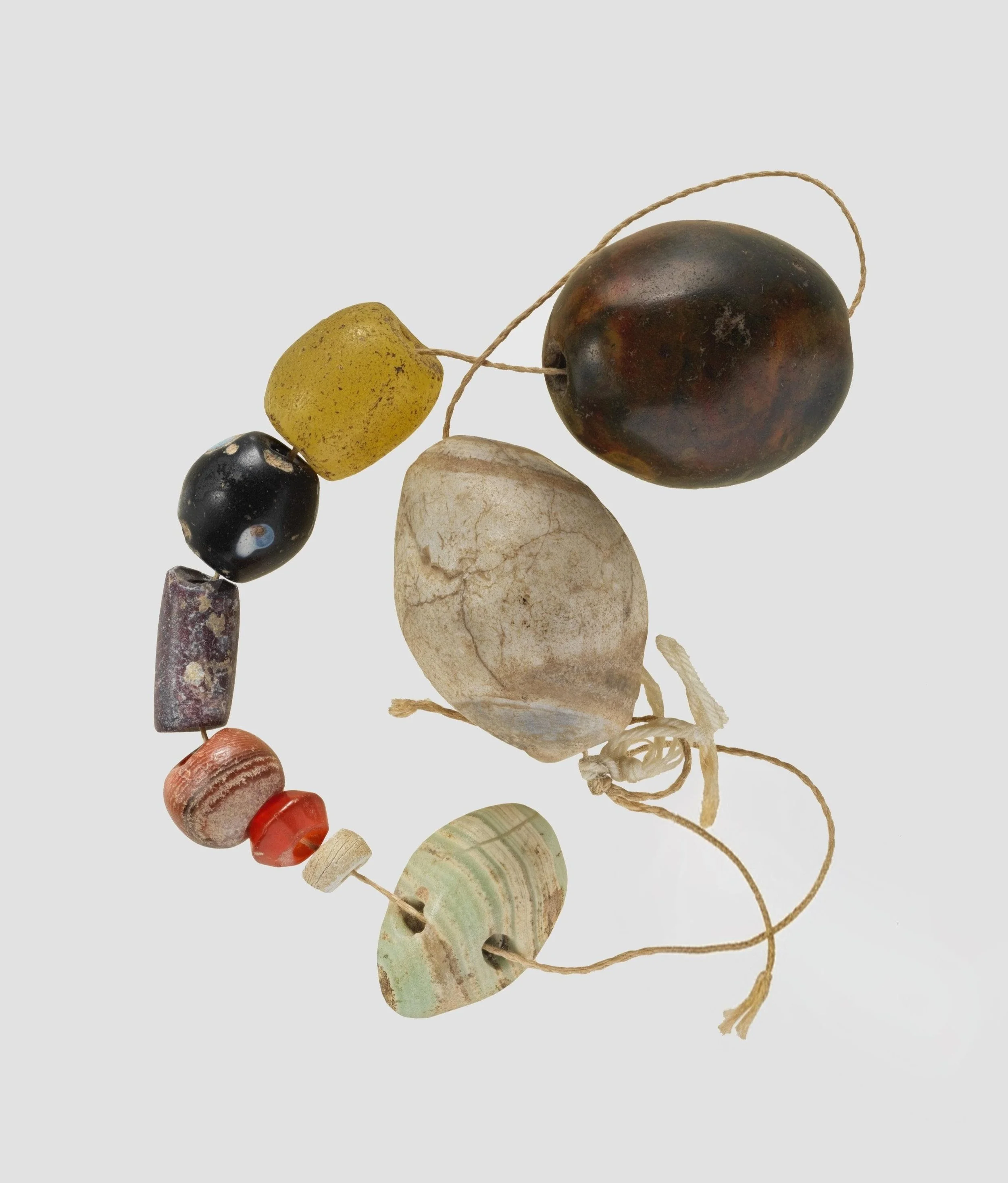
Selection of mis-matched stone beads. Iran. 3rd millennium BCE. Public Domain. Courtesy of the Metropolitan Museum of Art. Object Number: 38.40.373a–i
A simple object—a bead, for example—can tell us more than we might expect. It may be irregular, made of humble material, shaped by hand. It may not follow any strict geometry or ideal proportion. And yet, it was chosen, altered, arranged, and worn.
Why? Because something about it mattered.
Prehistory invites us to reconsider what creativity actually is.
It is not decoration added at the end. It is not refinement layered onto function. It begins much earlier—more quietly. First, there is an attraction to a form or material. Not yet a decision—something closer to curiosity, or even wonder.
A moment of pause.
A recognition, however instinctive, that this—among everything else—holds a certain presence.
Then comes a desire. To pick it up. To keep it. To shape it, or alter it in some way. Not simply to use it, but to engage with it—to bring it closer, to make it one’s own.
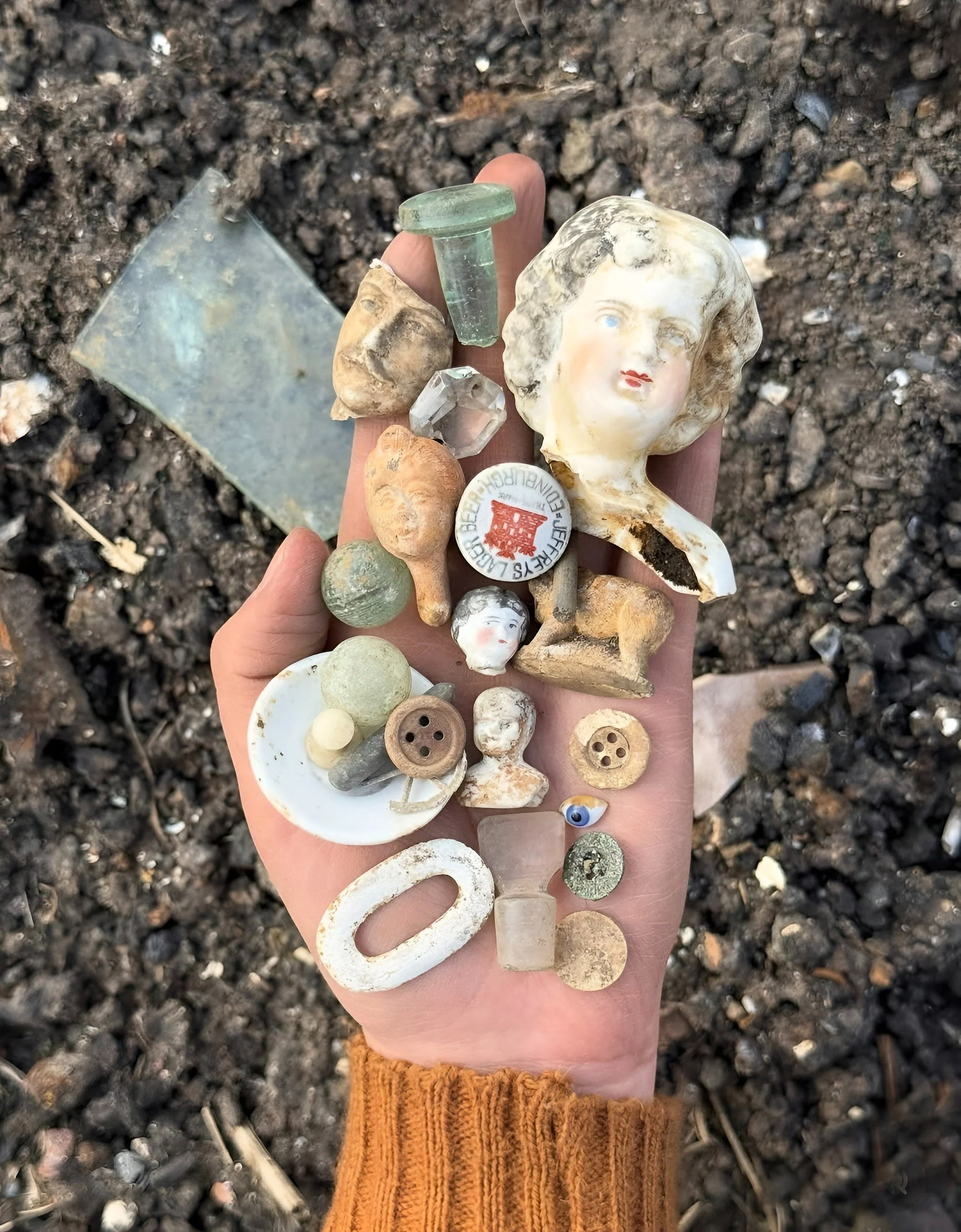
A collection of found objects. Photo courtesy of Northern Mudlarks. https://www.instagram.com/northernmudlarks/
And finally, there is an awareness—however subtle—that the result now carries meaning.
But what kind of meaning? Not a fixed message. Not a concept that could be explained in words.
It may have marked identity—this belongs to me. It may have held memory—this reminds me. It may have offered protection, connection, presence—or simple delight—this makes me feel.
Or perhaps it afforded something quieter: a sense of accomplishment, of completion—of a thing resolved.
We cannot know exactly. But we can recognize this: Form became the place where meaning could exist—outside the mind, and in the world.
This is why prehistory matters. It is not a distant, meaningless past, but the origin of things we still do—and still feel—today.
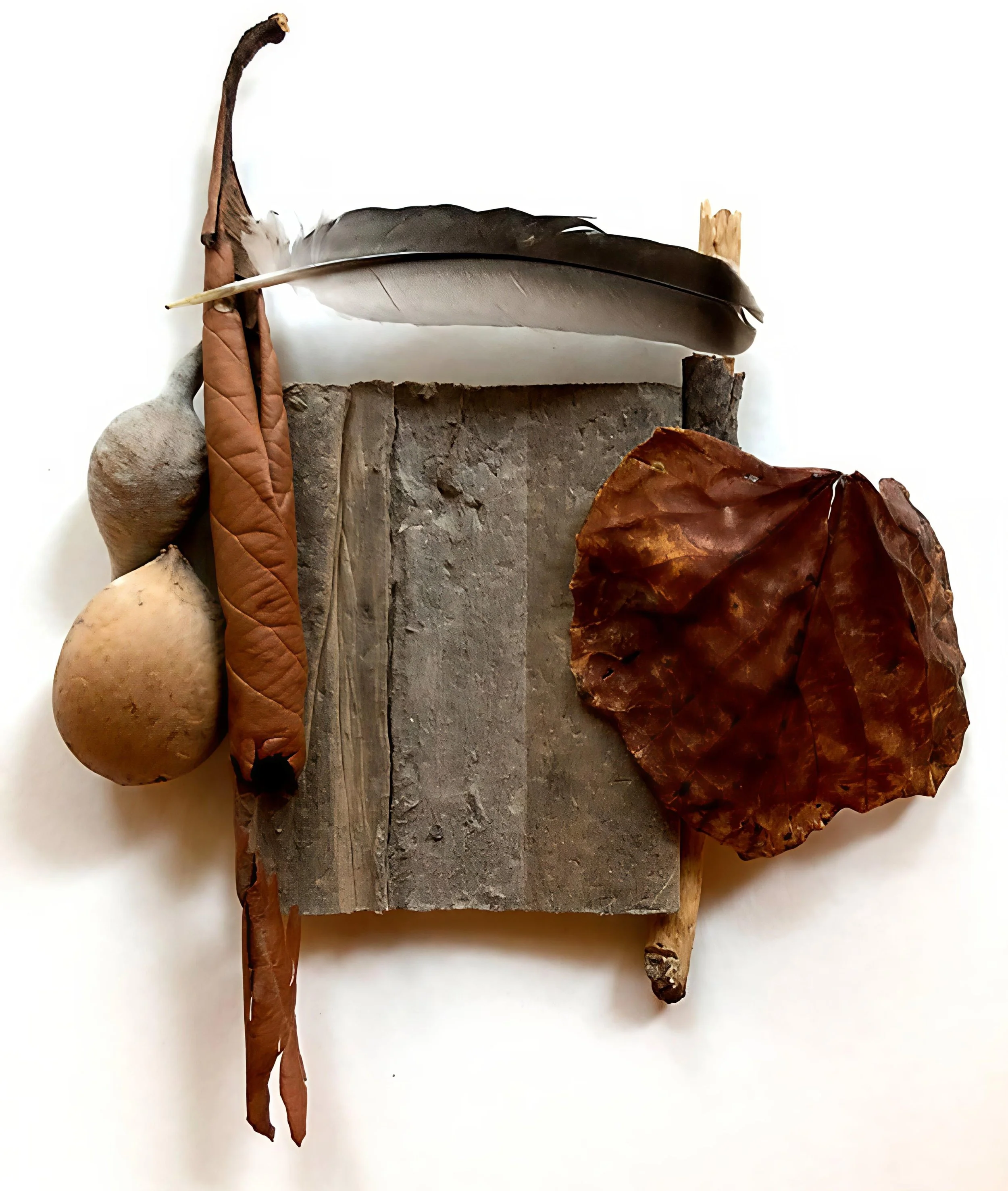
Assemblage of found objects. Photo courtesy of the artist, LYN BELISLE. https://www.instagram.com/lynbelislestudio/
Each piece carries its own history, reimagined through placement and relationship.
— Lyn Belisle
Before there were styles, movements, or disciplines—before the layers upon layers of interpretation we now place upon them—there was the human impulse to give form to meaning.
And that impulse has never left us.
Related reading: Creativity in Design: From Inspiration to Intention
Related reading: Creativity in Design: Before the Spark
Be sure to sign up below to receive guidance, visual insights, ideas, and resources to help you develop a deeper way of seeing and understanding art and design. (Coming soon!)
