
Finding Your Voice as a Designer, Part II: Developing Your Creative Voice.
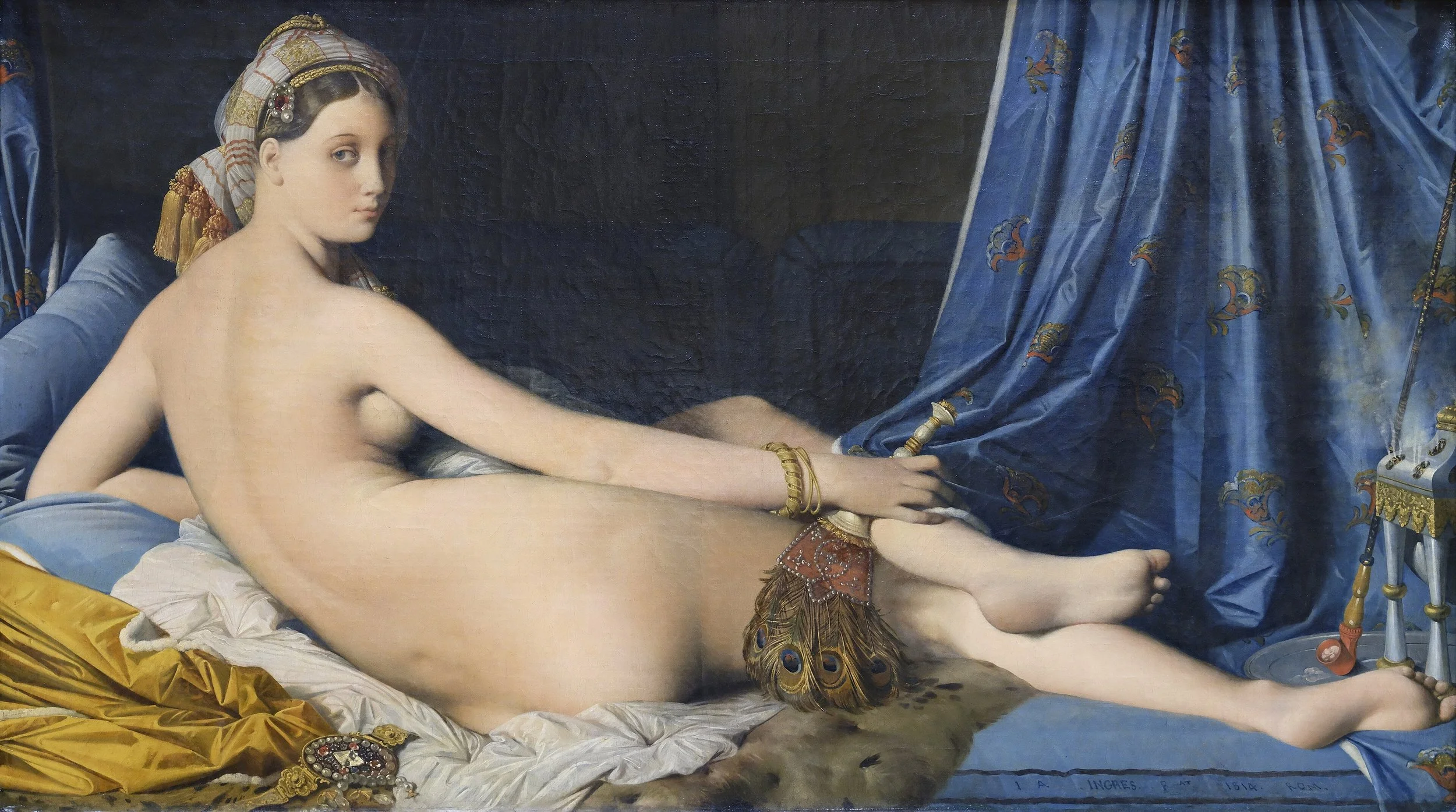
La Grande Odalique. Jean-Auguste-Dominique Ingres. 1814
In Part I, we looked at creative voice as something deeper than style or taste. It is reflected not simply in what a designer likes, but in how they see, what they value, the relationships they notice, and the decisions they make. As such, creative voice is an organic quality that develops and evolves over time. Some designers seem to possess a strong sense of it naturally. Some aren't sure what their voice is. Others know they are still trying to find it.
Part I identified some of the places a creative voice reveals itself—in our attractions and objections, in recurring principles, in the standards we use to judge our work, and in the instincts that often precede our ability to explain them. Now, the question:
What do we do with that information?
How do we become more conscious of those responses, learn from them, test them, and eventually use them with greater intention? Although that development is neither linear nor entirely conscious, we can begin to understand the process. At its simplest, it might be described this way:
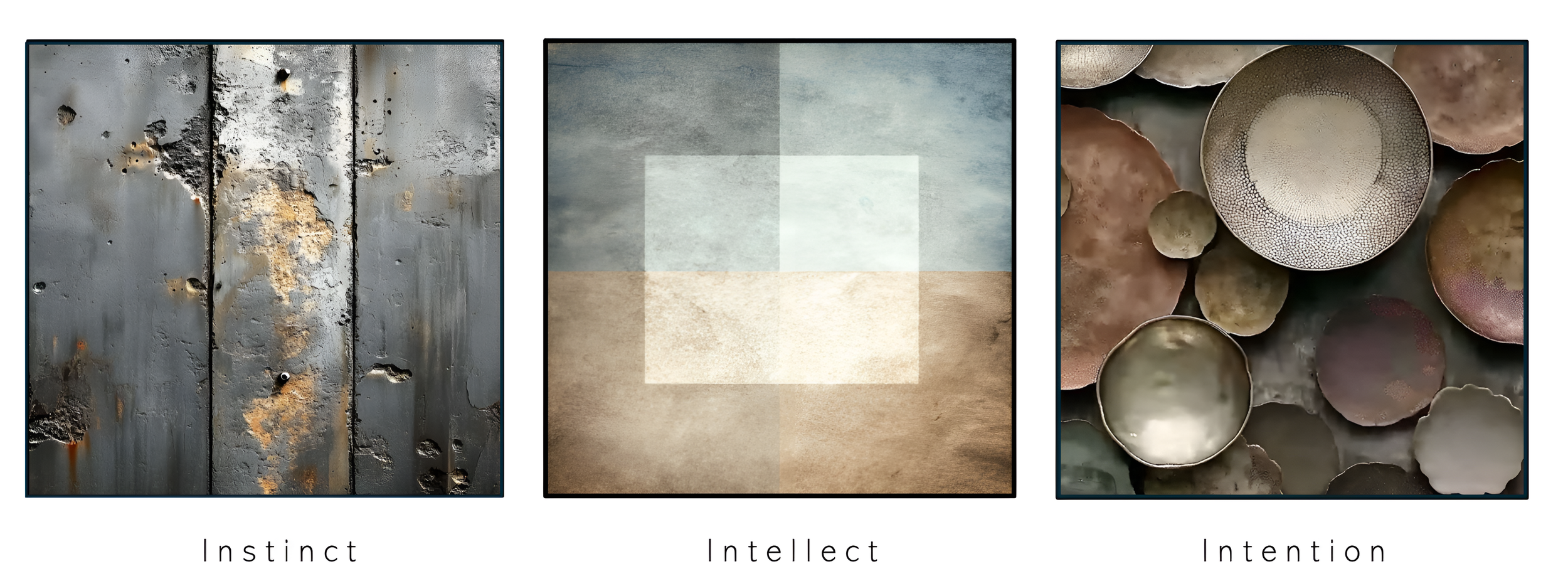
Instinct → Intellect → Intention
We begin with what attracts us. We learn to understand why. Eventually, that understanding informs what we choose to do.
Start With What Moves You
In Part I, we distinguished taste from voice. “I like this” tells us something, but not enough. Developing a creative voice begins by paying closer attention to the things that attract us—and then asking why. A useful place to begin is with a deceptively simple question:
What inspires you?
The answer does not have to come from design. It might be or a room, or the style of a particular designer or period, but it might just as easily be a painting, a landscape, a piece of music, a book, a particular material, a memory, a place you have traveled, the way someone dresses, or an atmosphere you have experienced. Inspiration can come from almost anywhere.
At first, we don't necessarily need to understand the attraction. We may simply feel it. Something captures our attention, moves us, excites our curiosity, or makes us want to look again. That response is worth noticing. (I explored the importance of paying attention to these small responses in Creativity I.
Begin collecting those responses without worrying about whether they make sense together. Then start asking:
What moves me?
What keeps getting my attention?
What, specifically, am I responding to?
Why?
This is where looking becomes analysis. If an interior feels calm, what produces that calm? If a painting feels dynamic, where does the movement come from? If a piece of furniture feels monumental, what creates that impression? If two very different things affect you in similar ways, what might they share?
The Elements and Principles of Design give us a vocabulary for answering those questions. Scale, proportion, rhythm, balance, contrast, color, texture, line, form, and space allow us to move beyond a general response—I love this—and begin identifying the visual relationships that are producing it. (For a discussion of the Elements and Principles of Design, click here
The feeling comes first. Understanding why we feel it is where the investigation begins.
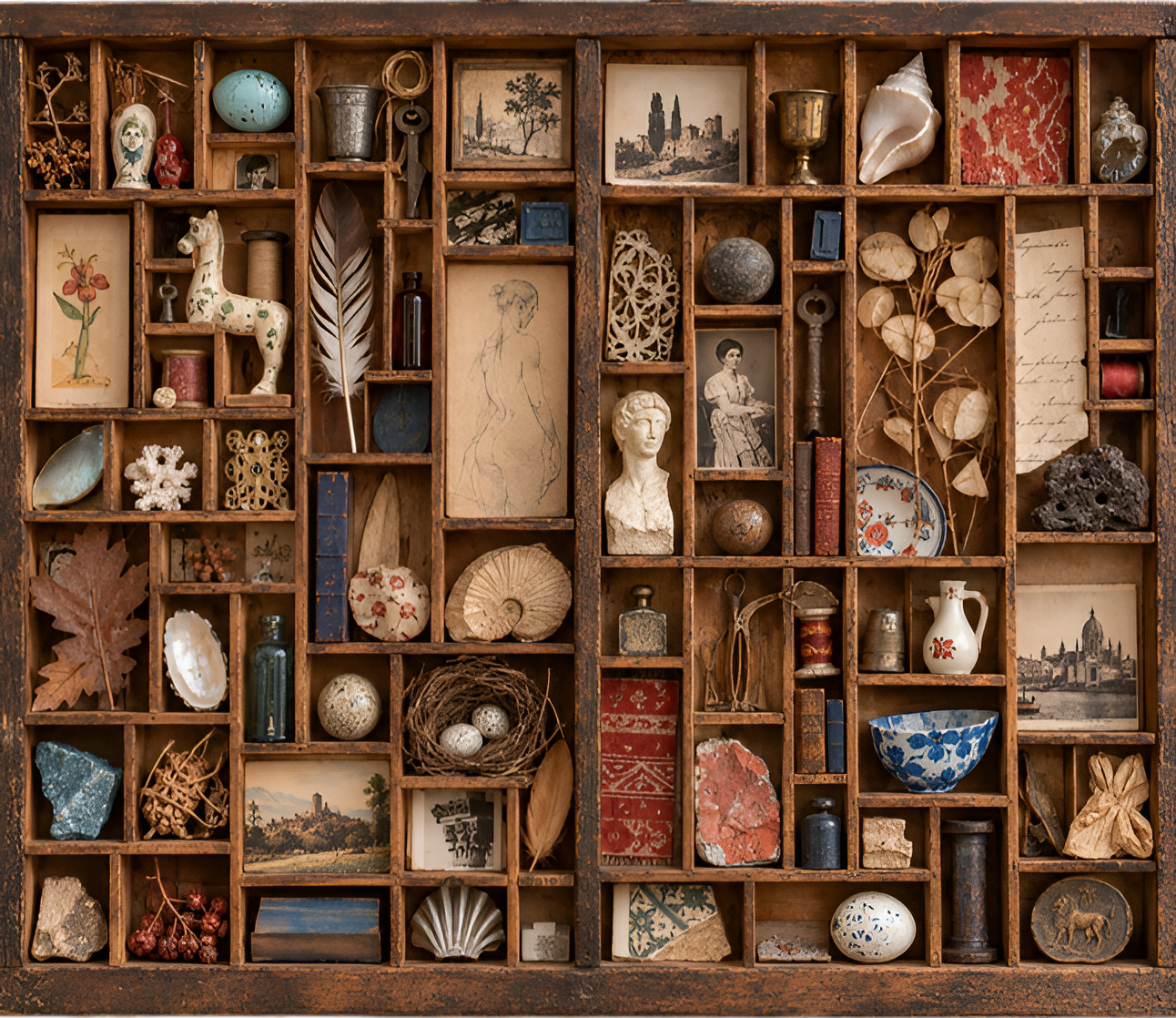
The Underlying Principle. Design and art direction by the author. AI-generated
Look for the Principles Beneath the Appearance
In Part I, we saw that style may repeat an appearance, while creative voice can repeat a principle. Now begin looking for those principles in the things that move you.
One way to uncover them is to look for connections between things you are drawn to that don't look alike. If everything you collect shares the same style, it can be difficult to tell whether you are responding to the style itself or to something deeper. But when two very different things appeal to you, comparing them can reveal what lies beneath their appearance.
Look back at the things you have identified as inspiring or compelling. Are there examples that look very different from one another? Put two of them side by side and ask what, if anything, they have in common. You might be drawn to both an elaborate 18th-century room and a spare Early Modern interior, or to a painting and a piece of furniture that seem to have little in common stylistically. Look beyond their subject or style.
What is operating underneath the appearance?
Perhaps both depend on strong contrast. Perhaps they share a sense of restraint, asymmetrical balance, irregularity, hierarchy, intimacy, drama, or an especially sensitive use of proportion.
The point is not to force a connection. There may not be one. But when the same kinds of relationships begin to appear repeatedly among otherwise very different things that move you, you are beginning to collect evidence about the principles that may underlie your creative voice.
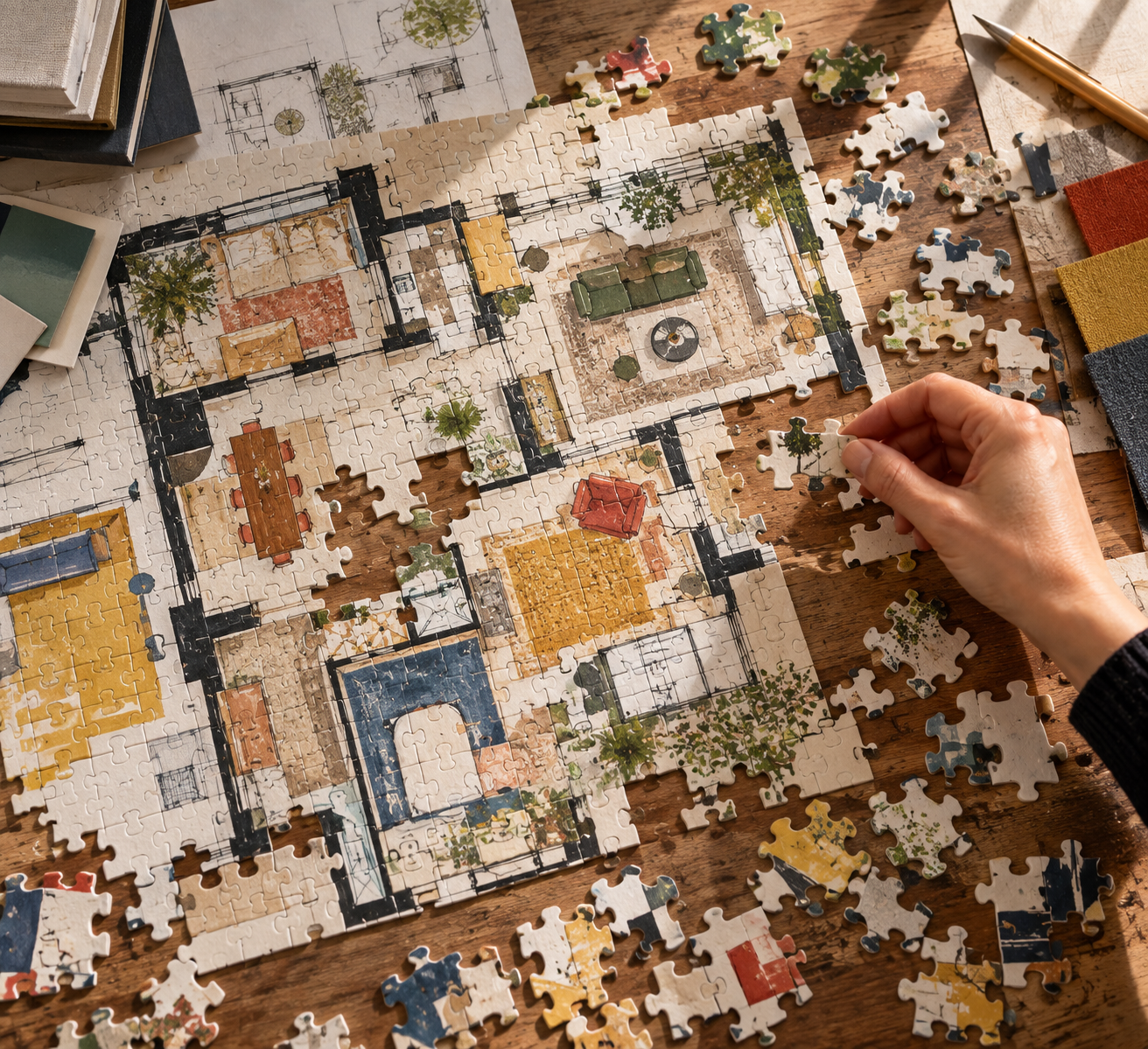
Reflection. Design and art direction by the author. AI-generated
Study Your Own Decisions
Now turn from outside sources to your own work. Don't look only at finished portfolio photographs. Go back through abandoned schemes, sketches, alternate layouts, materials you rejected, things you moved repeatedly, compromises that still bother you, and projects you still love years later.
The question to keep asking is: Why did I change that?
Sometimes the answer will be practical. But sometimes you changed something because the proportion felt wrong, the composition was too predictable, the contrast was too strong, the room felt too controlled, or something simply didn't sit right. You may not have been able to articulate the reason at the time, but you knew it needed to change.
Experience often means you are better at recognizing what is still wrong and knowing what to adjust.
That process is worth studying because those adjustments reveal the standards by which you judge your own work. What do you keep correcting? What are you unwilling to leave unresolved? What kinds of relationships do you keep pushing until they feel right?
Design is looking, adjusting, looking again, and continuing until the relationships feel resolved.
The finished design tells you something about your creative voice.
The decisions that got you there may tell you even more.
Study What You Reject
Attraction is only one source of information. The things you reject can be just as revealing—but only if you ask why. You may look at something and immediately think:
Too perfect. Too chaotic. Too coordinated. Too decorative. Too minimal. Too controlled. Too expected.
Don't stop at the objection. Interrogate it. Why does that bother me?
Perhaps “too perfect” reveals that you value irregularity or evidence of the human hand. “Too coordinated” may point to a preference for complexity, individuality, or unexpected relationships. “Too chaotic” may reveal how important hierarchy or visual order is to you.
The goal isn't simply to compile a list of things you dislike. It is to uncover what value of yours is being violated.
Over time, those objections may begin to reveal a pattern. The things you consistently resist can help define the principles you are unwilling to give up—and those principles, too, are evidence of your creative voice.
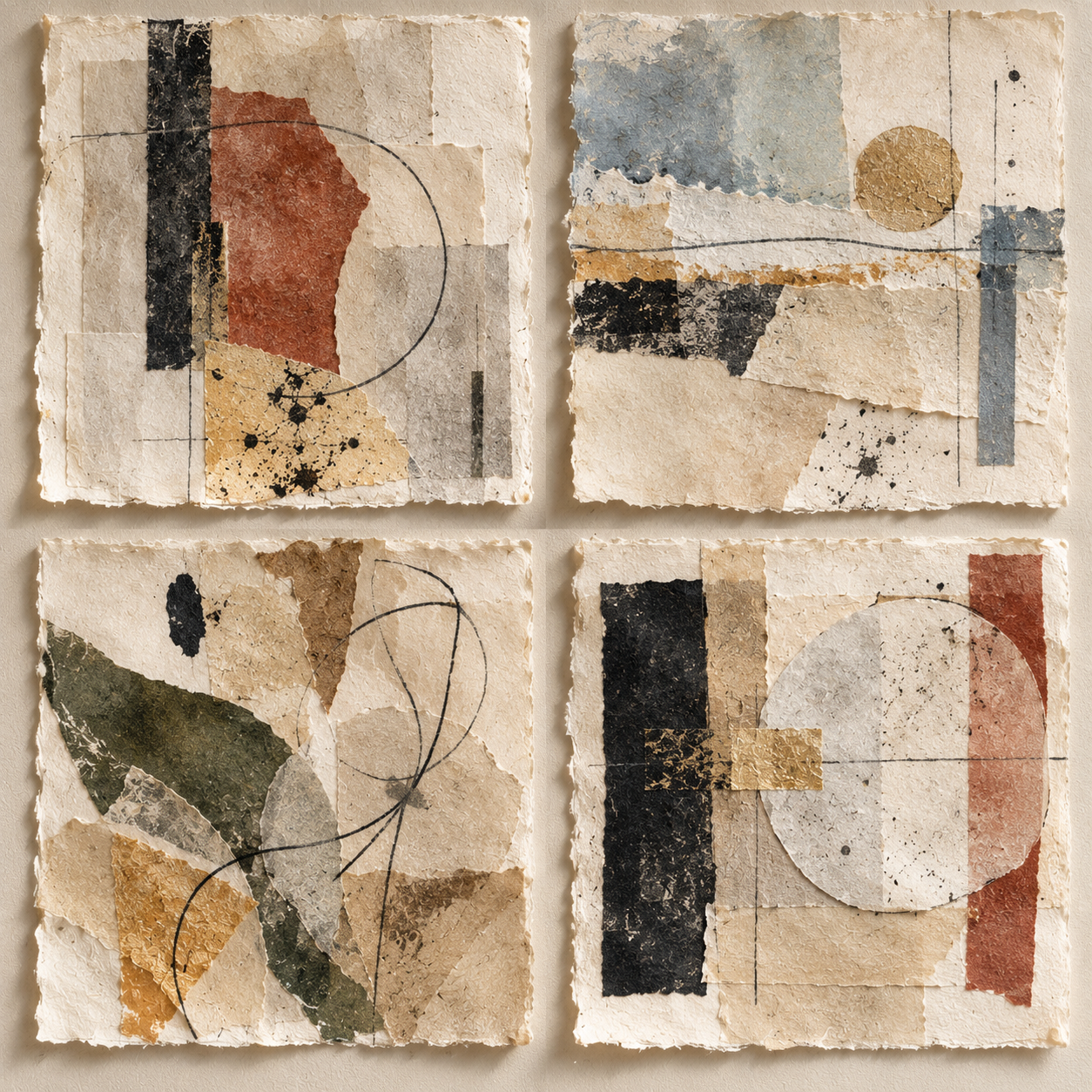
The Constant. Design and art direction by the author. AI-generated.
Test Yourself
Once you think you've discovered a pattern, don't immediately declare it part of your creative voice. Test it. If you think you value restraint, can you recognize restraint in something visually exuberant? If you are consistently drawn to irregularity, what happens when you work with a highly ordered composition? If you value contrast, can you create interest when the differences are subtle?
This is where experimentation becomes useful. Deliberately put yourself in situations that challenge your usual preferences. Work with an unfamiliar color palette. Study a period you have never particularly liked. Try a material you would not normally choose. Begin with a compositional strategy that feels foreign to you.
Design history can become a laboratory for this kind of investigation. Rather than borrowing the appearance of another period or designer, isolate a principle and experiment with it. What happens when you take the rigorous geometry of one period, the approach to color of another, or an unfamiliar way of organizing space and use it in a completely different context?
The point is not to prove that your first instinct was correct. It is to find out what remains important to you when the familiar visual cues are taken away.
Is this really one of my values—or merely one of my habits?
A genuine principle should be capable of more than one visual expression. Testing it helps you distinguish between something you habitually do and something that actually matters to you.
Satisfaction. Design and art direction by the author. AI-generated
Pay Attention to Recognition
Sometimes you have worked through a design problem, made the adjustments, and reached the point where the relationships feel resolved. And sometimes something more happens.
You recognize yourself in it.
It is a different kind of satisfaction. Not simply the satisfaction of knowing that the design is right, but the feeling that something about the choices you made, the relationships you established, or the whole you created feels distinctly like you.
Resolution tells you the design is right. Recognition tells you it is yours.
When that happens, don't simply enjoy the feeling. Study it.
What produced it?
Which decisions feel especially characteristic?
Have I felt this before?
What does this work share with those earlier moments?
You may discover that the projects themselves look quite different. What you recognize may not be a particular color, material, form, or style at all. It may be a recurring way of balancing order and irregularity, creating contrast, handling proportion, introducing surprise, or bringing unlike things into relationship.
That feeling of recognition is another kind of evidence. You may recognize your creative voice before you can fully explain it. The task is to pay attention closely enough to begin understanding what you are recognizing.
Let Other People Be Evidence, Too
Sometimes other people recognize a pattern in our work before we do. Someone may look at a room, a drawing, or even an unfinished idea and say, “That’s so you.”
Don't allow other people to define your creative voice. But when different people independently recognize something as characteristic of you, pay attention. What are they seeing?
Ask them. Is it the way you use color? The relationships between objects? A particular kind of tension or restraint? The way you handle scale? The unexpected thing you almost always seem to introduce? Their answer may surprise you. We can become so accustomed to our own ways of seeing and making decisions that we no longer notice what is distinctive about them.
Other people's recognition isn't proof of your creative voice. But it is another clue—and another piece of evidence worth examining.
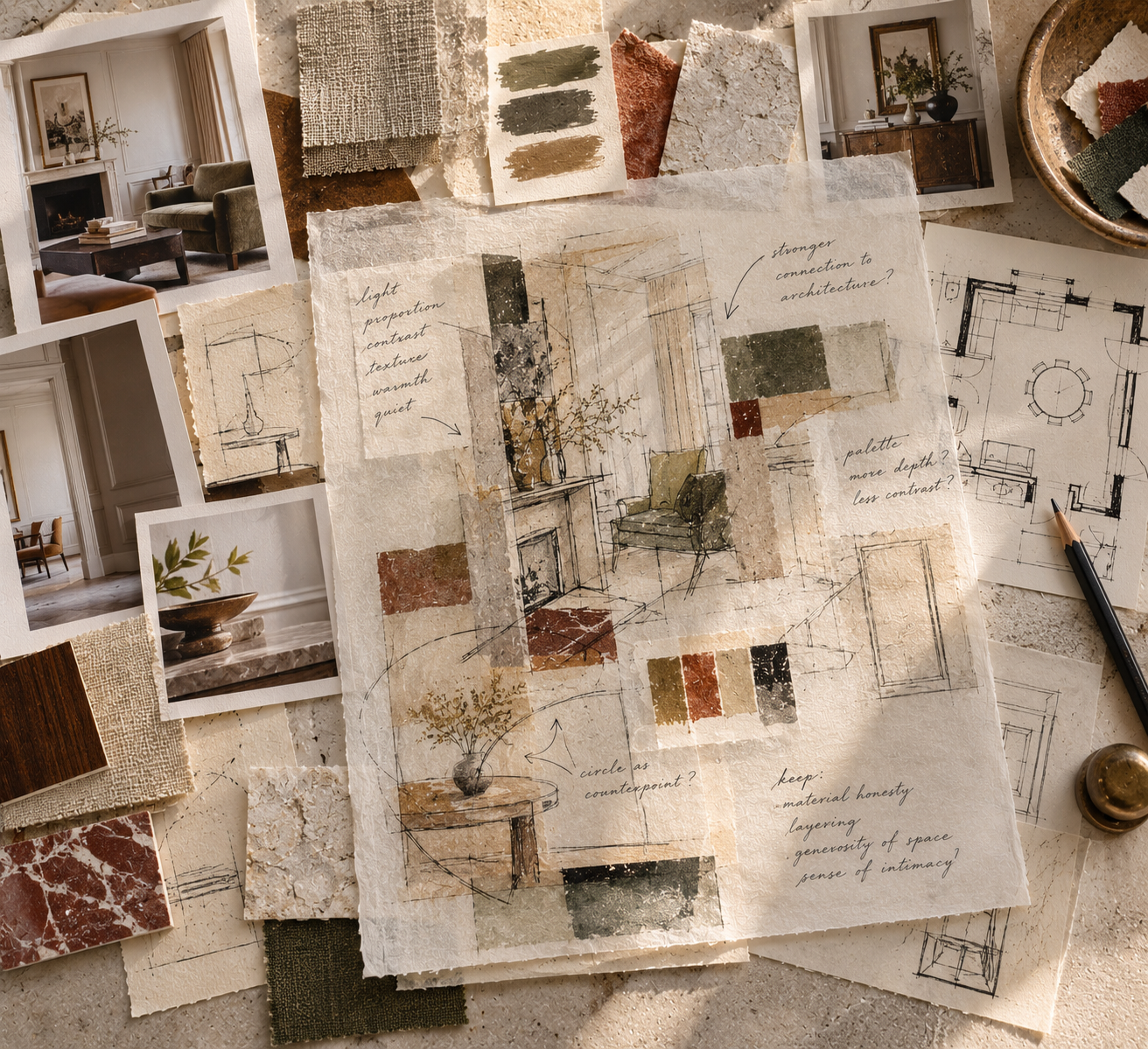
Discernment. Design and art direction by the author. AI-generated
Turn Experience into Judgment
Part I argued that experience alone does not necessarily produce insight. What matters is what we learn to see and understand while we are working. One way to think about it is as a continuing cycle:
Make → Look → Question → Adjust → Understand → Apply
You make something. You step back and look at it. You ask what is working, what isn't, and why. You make an adjustment and look again. With each decision, you become more discerning—not simply about whether something works, but about what makes it right.
Over time, this process sharpens judgment. You begin to recognize relationships more quickly, understand what needs attention, and distinguish between a solution that is merely acceptable and one that feels resolved. And what you learn doesn't remain with that particular project. You carry it into the next decision, the next problem, the next piece of work. Then the cycle begins again.
This is where all the evidence you have been gathering begins to inform the way you work: what attracts you, what you reject, the decisions you repeatedly make, what happens when you test yourself, and those moments when you recognize yourself in what you have made.
Judgment develops through use. Each time you look, question, adjust, and understand, you become more discerning about what matters to you—and more able to act on it.
From Instinct to Intention
At the beginning, we described the development of creative voice this way:
Instinct → Intellect → Intention
At first, our response may be little more than: I just like it. With attention and analysis, that can become: I understand what I'm responding to. And eventually: I can deliberately work with that understanding.
But intention does not replace instinct. The goal is not to intellectualize creativity until every response has to be explained or every decision justified. Instinct remains an essential part of the creative process.
What changes is what instinct has to work with. Knowledge expands our possibilities. Experience sharpens judgment. Reflection helps us recognize our own patterns. And greater self-awareness gives us the freedom either to follow an instinct—or deliberately challenge it.
A Voice That Continues to Develop
A creative voice is never really finished. New experiences, new knowledge, new influences, and new problems continue to test and expand it. What changes over time is not necessarily the presence of instinct, but our understanding of it and our ability to work with it intentionally.
Developing a creative voice, then, is not about arriving at a fixed identity or recognizable look. It is about becoming increasingly aware of how you see, what you value, what you notice, and why you make the choices you make.
And eventually, those discoveries lead to a larger question. Not simply: What do I respond to? But:
What do I believe about design—and why?
That is where creative voice begins to develop into something more deliberate: a design philosophy.
Download a one-page outline: Three Way to Watch Your Creative Voice Develop
