
Case Study: Material Authenticity: How materials, construction, and design history can shape a design concept
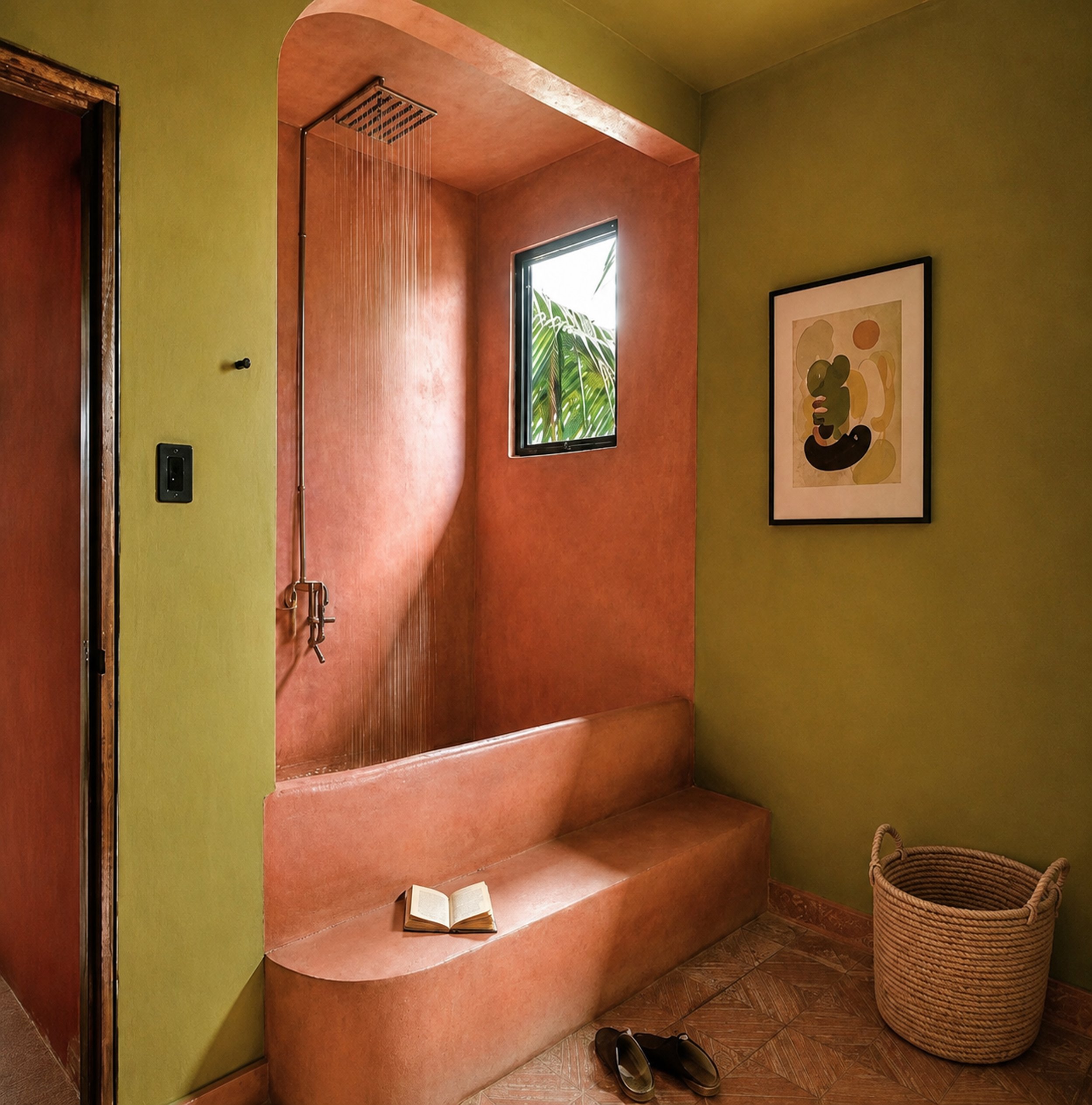
Bathroom from a recent renovation in England. Pearl Lowe. Image courtesy of Pearl Lowe. www.instagram.com/pearllowe. www.pearllowe.co.uk
I came across this bathroom the other day and stopped scrolling. Whether you like it or not isn't the point. What interests me -- and should interest you as a designer -- is where it came from. Not this particular bathroom, but the idea behind it. Within seconds, two architects came to mind: Rudolf Schindler and Luis Barragán.
At first glance, they might seem like an unlikely pair. Schindler's revolutionary experiments with concrete, plaster, and integrated architecture date to the early 1920s. Barragán's intensely colored, deeply moving spaces came much later in Mexico. Yet both are here: architectural forms, authentic materials, industrial overtones, minimalism, and color that is integral to the material rather than simply applied to its surface. (For more about the history and importance of authenticity in design, click here and here).
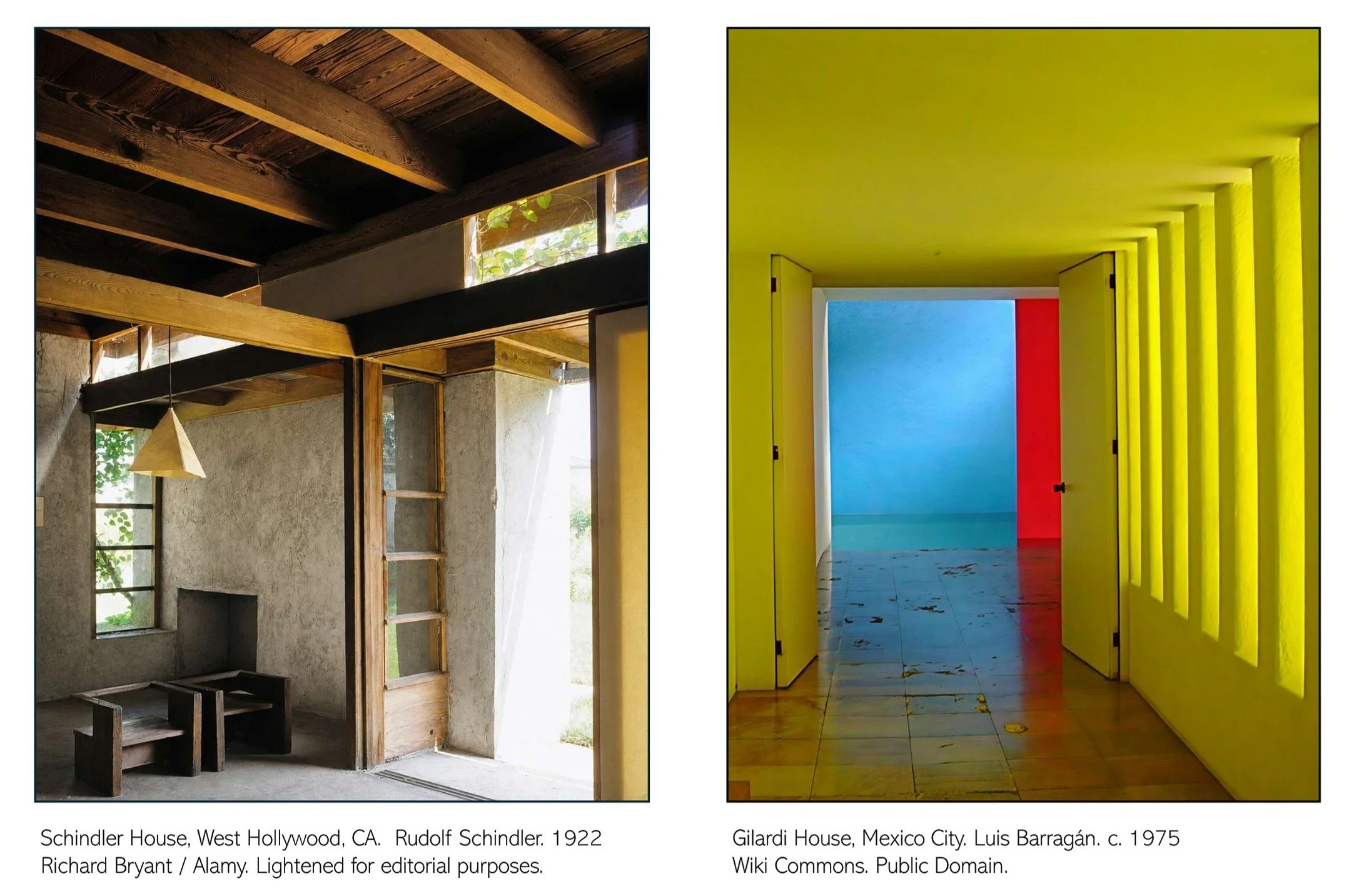
The Journey of Ideas
Ideas migrate. They are explored by one designer, transformed by another, absorbed into the language of design, and rediscovered by later generations. What appears completely new is often part of a much longer—and much older—conversation.
That's one reason I enjoy studying design history. I'm naturally curious, and design history lets me explore the "why" behind the things that fascinate me most. Many people think history is about understanding the past. It is. But for designers, that's only the beginning.
Design history also explains the present. Nothing happens in a vacuum. It allows us to trace the roots of objects, imagery, and ideas. It helps us understand why today's buildings, interiors, furniture, and objects look the way they do.
But perhaps even more importantly, design history is one of the richest sources of creative inspiration we have. (I explore this idea in greater detail in here). Not because it gives us old styles to copy, but because it gives us ideas to work with, build upon, and reinterpret.
The purpose of studying design history isn't to recreate the past. It's to understand where some of today's ideas may have come from—and to discover ideas that can help shape the future of design. So I'd like to investigate the materials used in this bathroom through that lens.
Modernism and Materials
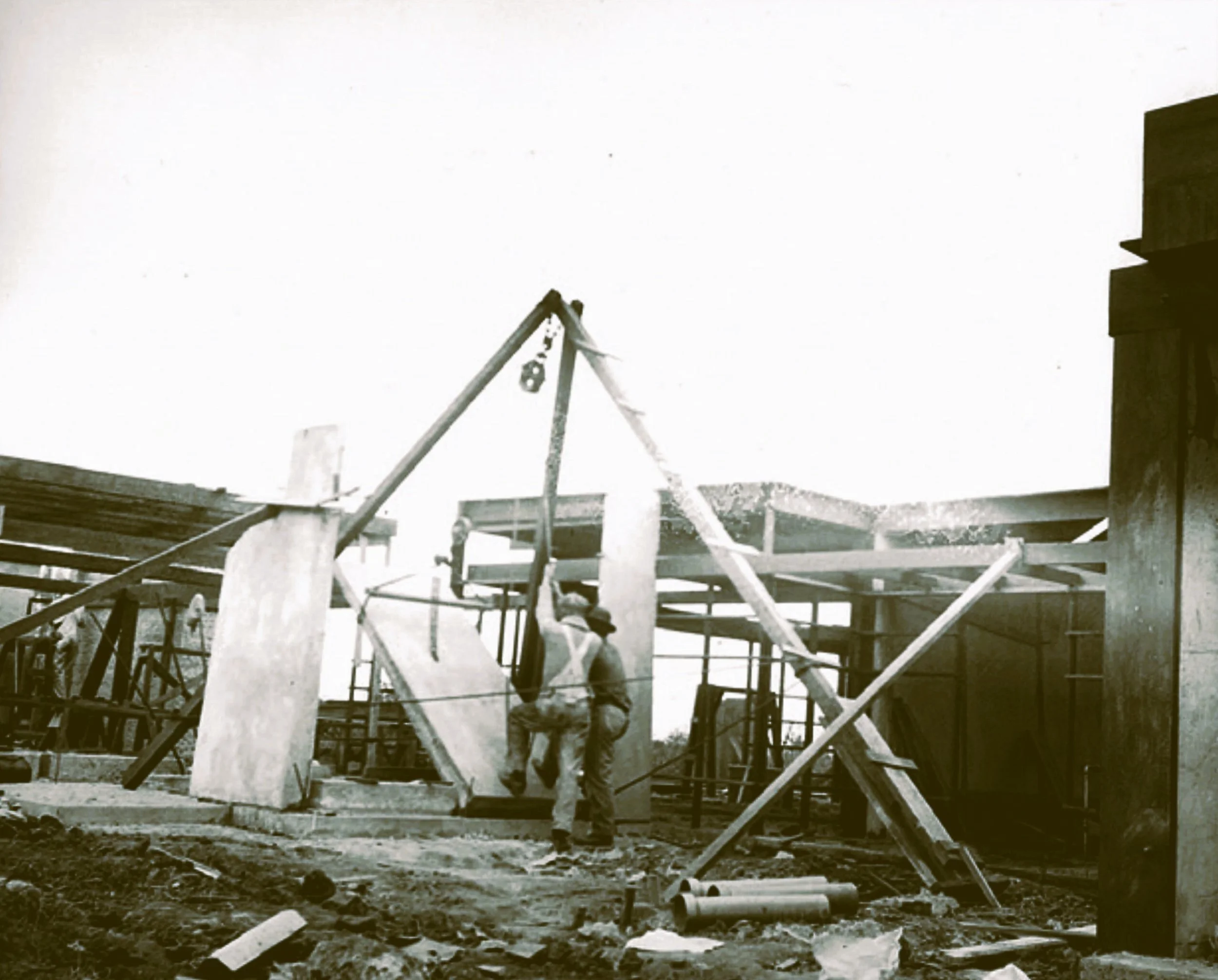
Tilt-up construction, Kings Road House (Schindler House), West Hollywood, CA. Rudolph Schindler. April 1922 (Architecture & Design Collection. Art, Design & Architecture Museum; University of California, Santa Barbara) https://creativecommons.org/licenses/by-sa/4.0/
Working to develop a new architecture for the twentieth century, Rudolf Schindler was exploring new possibilities for space, materials, and form alongside his peers at the Bauhaus. As such, he embraced two ideas that would profoundly shape twentieth-century design: the expressive possibilities of industrial materials and a new understanding of space inspired, in part, by Japanese architecture.
Frank Lloyd Wright had already demonstrated the importance of Japanese architecture to a generation of progressive architects, and Schindler absorbed those lessons during the years they worked together. So, the combination of Modernism, through the use of industrial materials, and a Japanese aesthetic, in terms of organizing space, were not arbitrary decisions; they were meaningful, to both himself and the context.
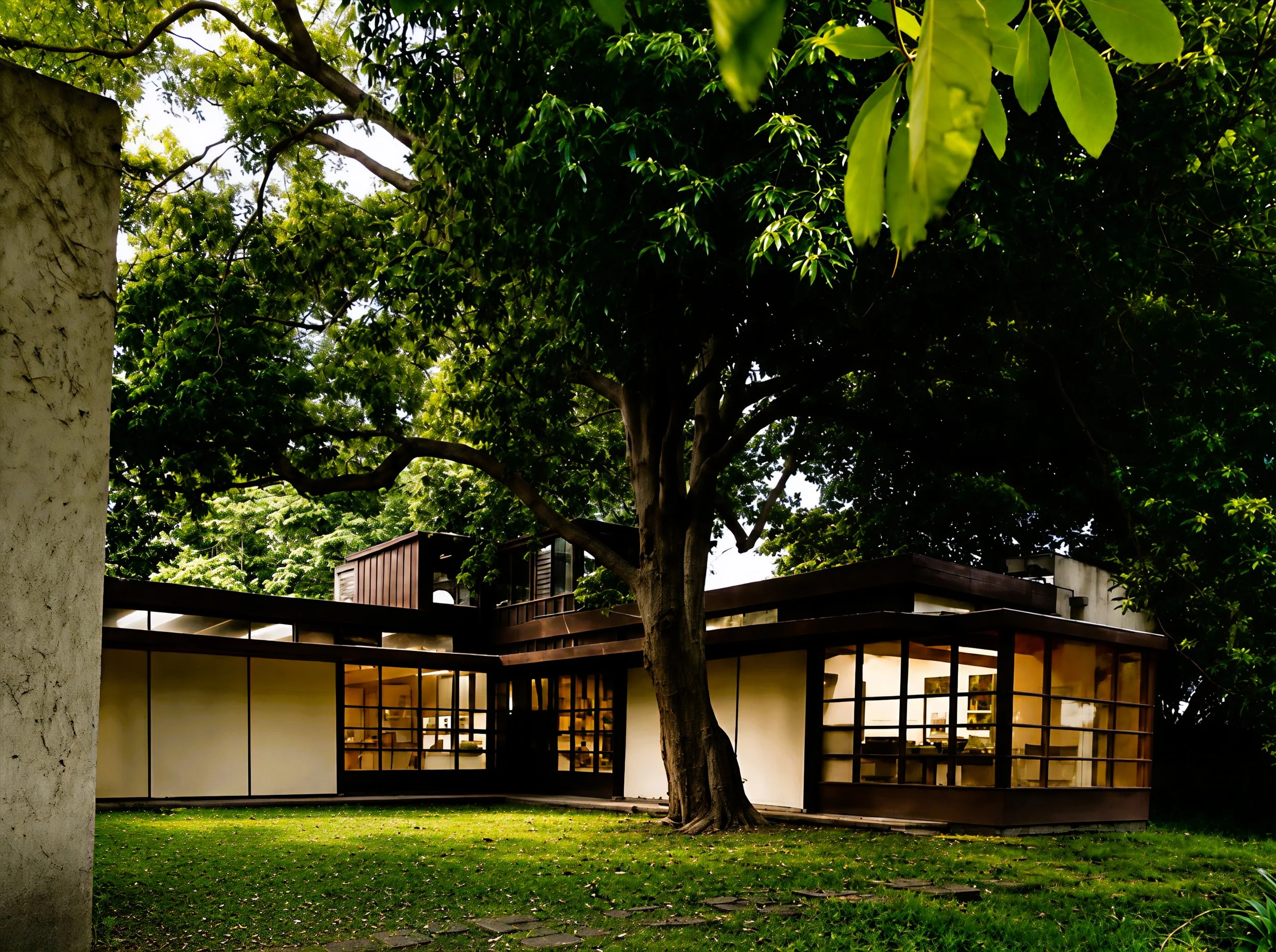
Schindler House, West Hollywood, CA. Rudolf Schindler. 1922. Wiki Commons Public Domain image, enhanced by AI for editorial purposes.
But how these materials are used is key: wood, steel, plaster, concrete, exposed plumbing—nothing is disguised. Every material is allowed to reveal exactly what it is and how the building is made. Today we might describe this idea as material authenticity. By that I mean allowing materials to reveal their own nature rather than disguising them or forcing them to imitate something else.
Why did Schindler choose this approach? In part because most progressive architects and designers who were working to develop this new style were committed to two of the most important rules for the new way of designing, as laid out by Augustus Welby Northmore Pugin in the early nineteenth century: Truth in materials and truth in construction. (For a detailed discussion of this concept, click here and here. And download Pugin’s rules for good design here). Schindler's bathroom at the Kings Road house is an early and powerful expression of that principle.
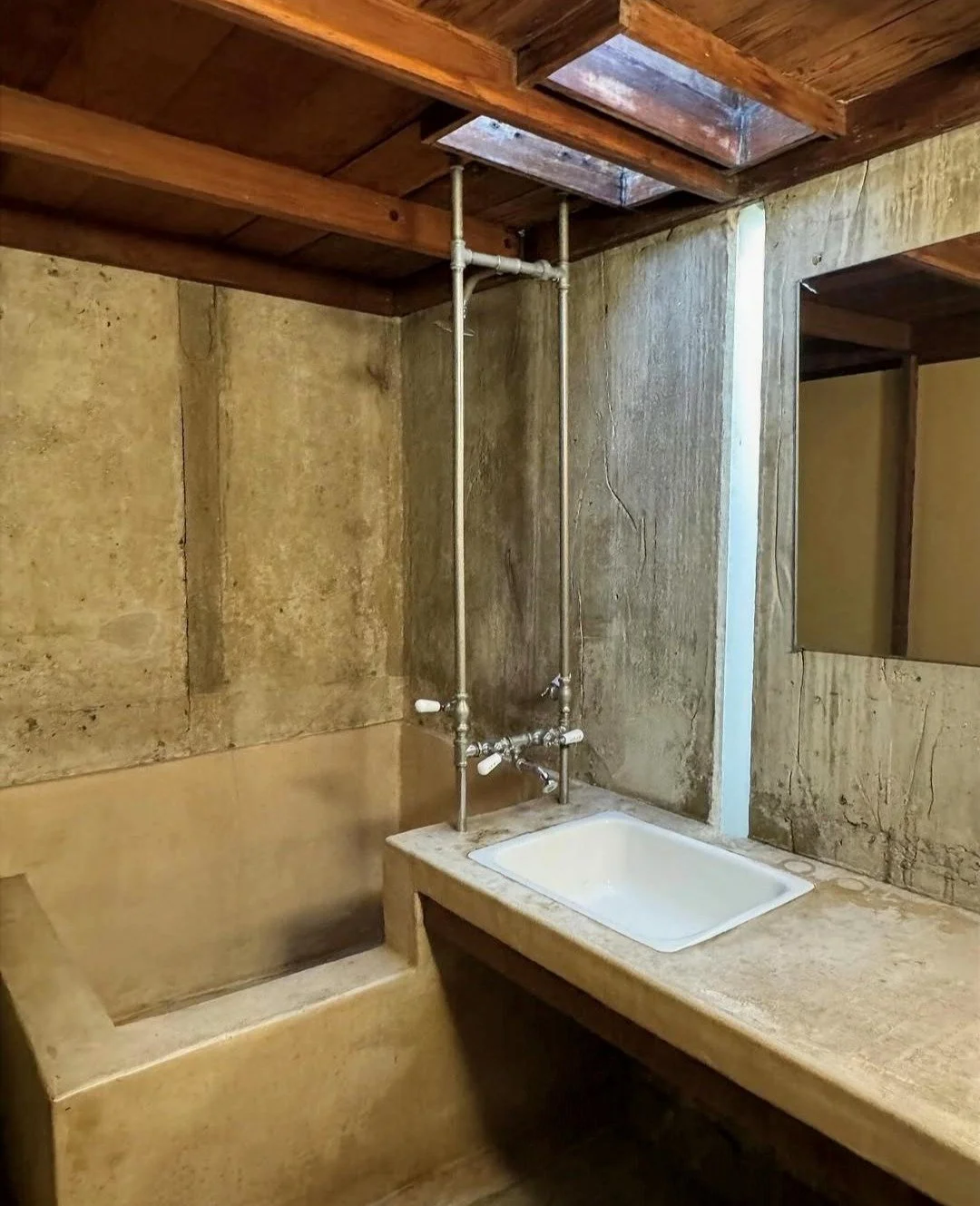
Bathroom at Schindler House, West Hollywood, CA. Rudolf Schindler. 1922. Image courtesy of The Curator. Instagram: https://www.instagram.com/thecurator_la/ Web site: www.thecuratorla.com
Perhaps it was also an exercise in seeing how far minimalism – an important tenet of the emerging style later known as Modernism-- could be taken. How little was actually required to create shelter? How far could architecture be reduced without sacrificing function or dignity?
More than a century later, this question still resonates. And in many circles of the design world, truth in materials and construction has become such a given that few even remember why. The forms have changed. The colors have changed. But the underlying value remains: beauty often emerges when materials are allowed simply to be themselves.
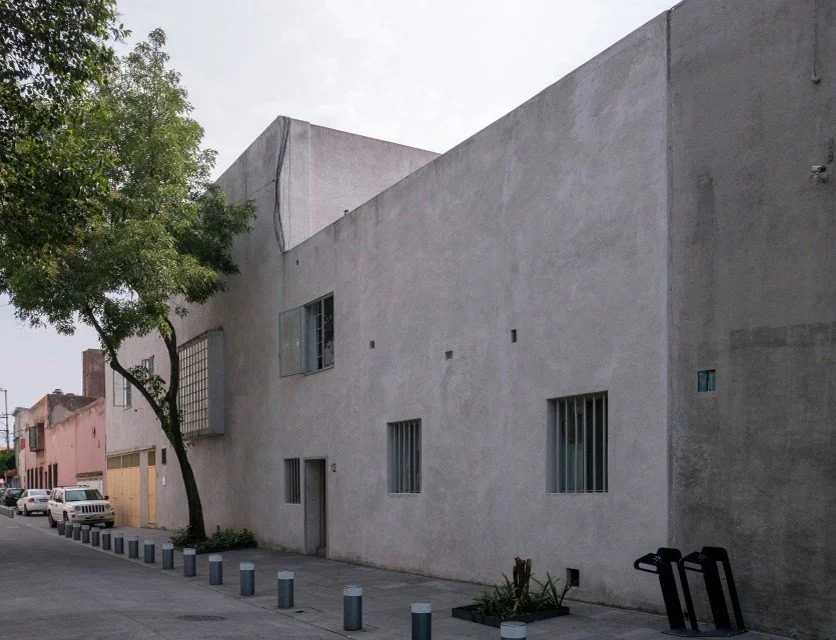
Luis Barragán House and Studio. Mexico City. Luis Barragán. 1948. Wiki Commons. Public Domain
Working a generation later, after Modernism had become an established international language, Barragán admired its clarity but felt that something essential had been lost. Travels in Europe and encounters with Le Corbusier had instilled a Modernist foundation. However, he felt the need to ameliorate what, by that time, many perceived as its starkness and coldness.
How did he do this? As a native Mexican, a natural – therefore meaningful -- choice was through color: crisp geometry covered in brightly tinted, textured plaster. The result, in his own words, “…architecture as a sublime act of poetic imagination…. buildings not as cold structures, but as emotional spaces meant to evoke beauty, silence, and serenity.”
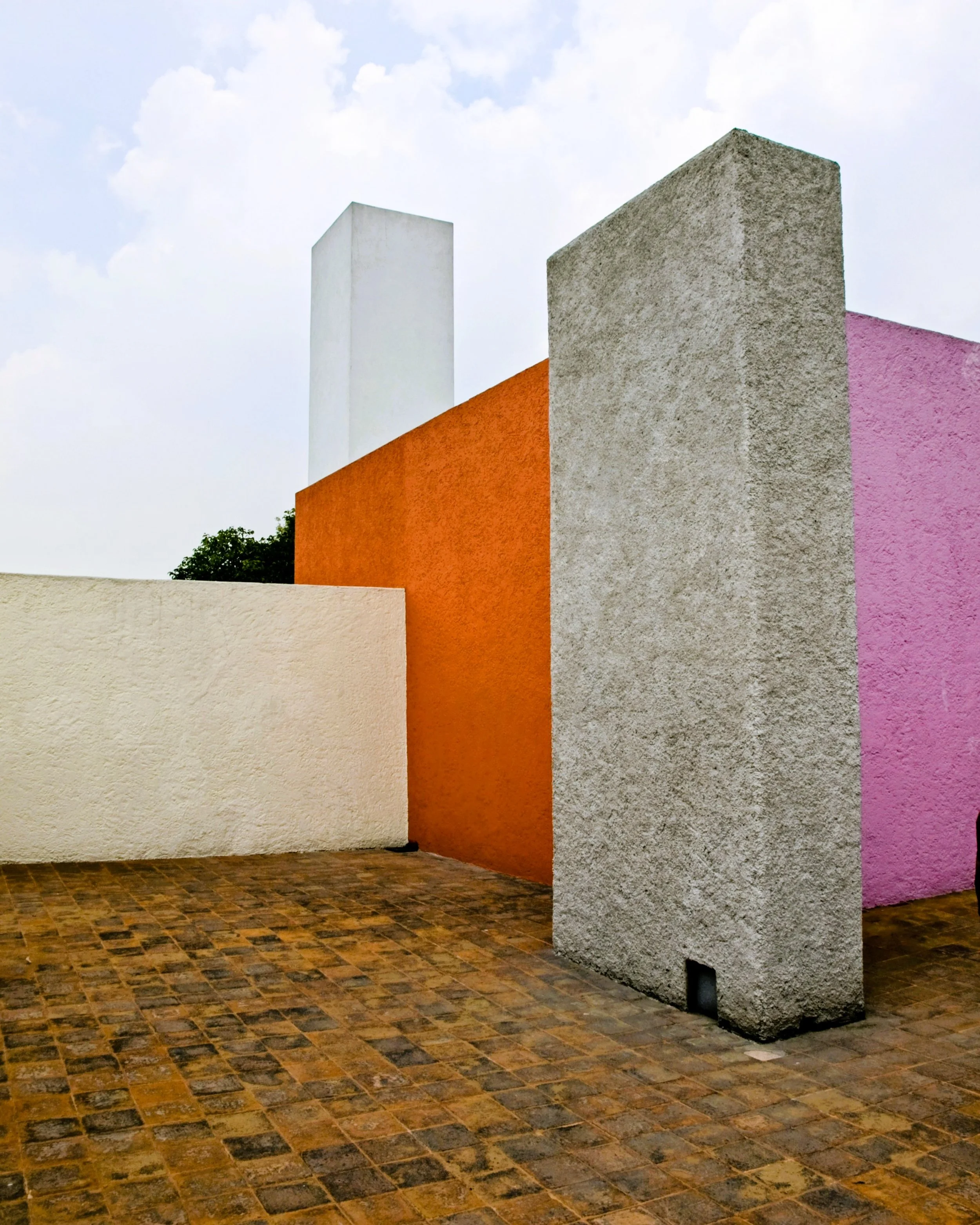
Luis Barragán House and Studio, the Roof Patio. Luis Barragán. Mexico City. 1948. Wiki Commons. Public Domain. https://commons.wikimedia.org/wiki/User:Ymblanter. https://creativecommons.org/licenses/by-sa/3.0/deed.en
In both Schindler's and Barragán's work, materials are never superficial decoration. Concrete remains concrete. Plaster remains plaster. Color is integral to the material itself rather than superficial. Each architect, in his own way, demonstrates a profound respect for material authenticity.
Those discoveries didn't end with Schindler or Barragán. Every generation inherits ideas like these and finds new ways to reinterpret them. Was Pearl Lowe consciously inspired by either architect? I don't know. But that's almost beside the point. What interests me is the design thinking. Because this bathroom reflects a very real architectural condition.
When the Building Shows the Way
Solid masonry or plaster walls make concealed plumbing difficult, expensive, or even impossible. So exposed plumbing isn't simply an aesthetic – or trendy -- decision. It is a practical response to the reality of the situation. And in that, a truthful, authentic solution. Once that decision is made, the rest of the design unfolds almost on its own. How is that?
What kinds of buildings are typically constructed this way? Commercial, industrial, historic and older rural buildings. With two elements of an industrial aesthetic already in place -- solid walls and exposed plumbing -- what kind of aesthetic, in terms of design history and reality, would work best here? My first thought would be Modernism -- which also calls for minimalism. Another piece falls into place.
But perhaps this residence belongs to a person who would not appreciate a bathroom like Schindler’s. And perhaps that is not your brand as a designer. So what is the most authentic, simple, pleasing way to relieve the industrial quality? To remain consistent with the Modernist concept, you might do some research and discover Barrigan, if you did not already know of him – and add color to the plaster. (For a deep discussion of how to develop a design concept, click here).
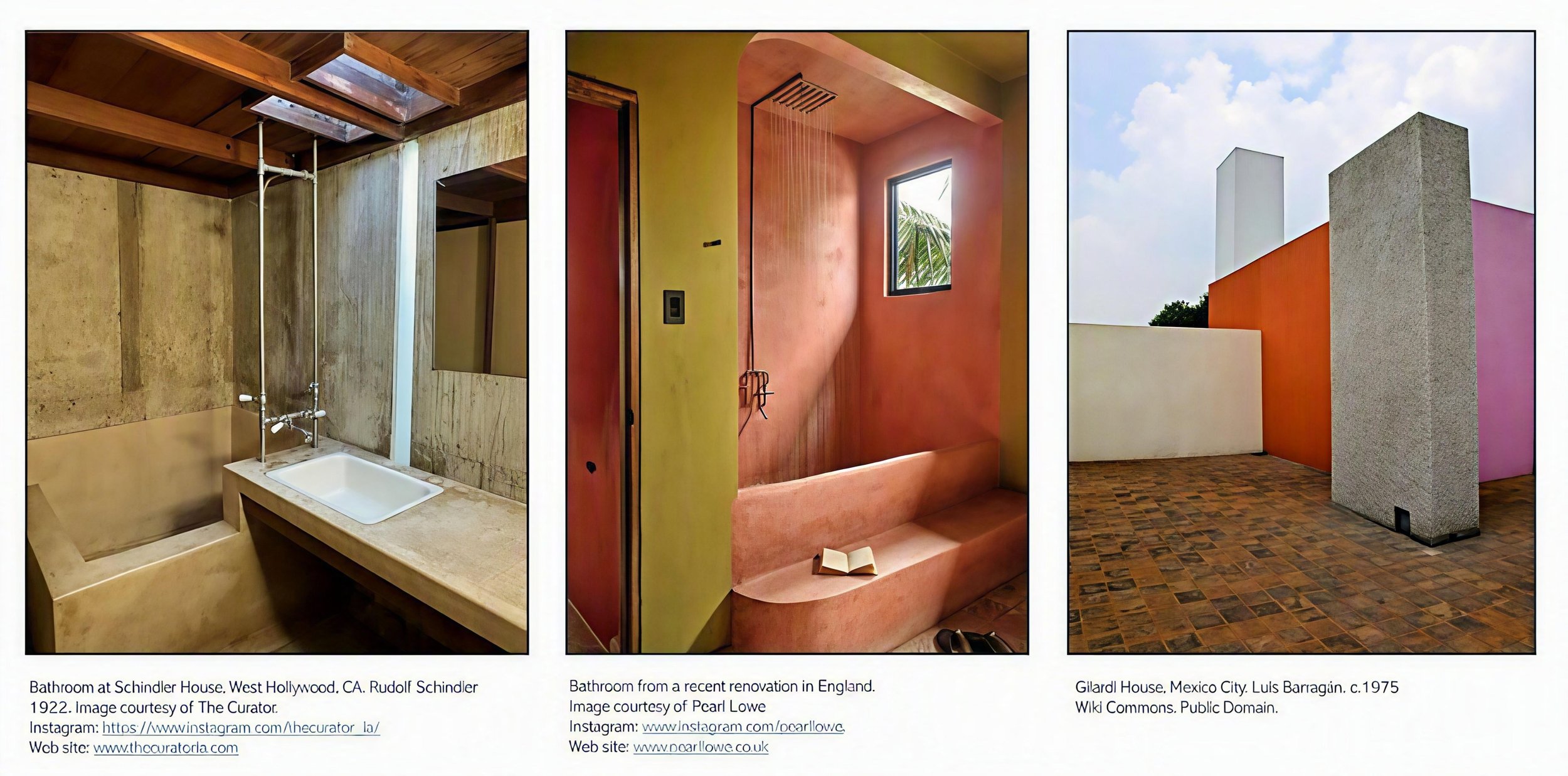
Do you see how all the dots connect here? Not only the connections with design history and theory, but also: the “problem” can actually be your solution. Instead of fighting the building, the designer works with it. Instead of hiding the construction, it becomes part of the composition. Instead of treating the existing conditions as obstacles, they become the very source of the design language.
This, I think, is the deeper lesson. Design history is full of beautiful objects. But beneath those objects are ideas—ideas that continue to solve problems and inspire new work.
Material authenticity is one of them.
Schindler expressed it through exposed concrete and structure. Barragán transformed it with textured plaster and color. Pearl Lowe carries the conversation forward in her own way, combining industrial honesty with warmth, vintage character, and a distinctly contemporary sensibility.
The styles are different. The centuries are different. The personalities are different. But the underlying design value remains remarkably consistent.
Of course, this isn't the only way to approach a design problem. But when a building's materials, construction, and history suggest a clear direction, there's wisdom in paying attention and in following where those clues lead.
In my opinion, for designers, this is the real value and purpose of studying design history. Not to copy the past, but to recognize enduring ideas that are still capable of guiding us and shaping meaningful design today.
If you enjoyed this Case Study, I invite you to subscribe below and join me on Instagram @RyanArtAndDesign, where we continue exploring what the rich history of art and design has to offer contemporary designers.
Related reading: Connecting the Dots: Why Design History Matters to Practice; The Elements and Principles of Design: What are they? And why do they matter for interior designers?; The Design Reform Series, starting with the Introduction; Design Concept in Interior Design: Meaning, Method, and Creative Depth
Be sure to sign up below to receive guidance, visual insights, ideas, and resources to help you develop a deeper way of seeing and understanding art and design. (Coming soon!)
